20 Painting Ideas On Canvas | Creative Designs to Try
A blank canvas can become almost anything with a little paint and imagination. Whether you are a beginner looking for a relaxing project, a parent planning a creative activity, or an artist searching for simple inspiration, there are countless painting ideas on canvas to explore.
Canvas is especially useful for painting because it provides a sturdy surface for many types of artwork. You can create landscapes, flowers, abstract compositions, animals, seasonal scenes, or colorful decorative pieces without needing advanced artistic skills.
The following 20 ideas are divided into four categories to make choosing a project easier. Some use simple shapes and brushstrokes, while others encourage more detailed experimentation.
Nature-Inspired Canvas Painting Ideas:
1. Simple Sunset Landscape
A sunset is one of the easiest subjects to transform into attractive canvas artwork. Begin with a light yellow or orange area near the horizon and gradually introduce pink, red, purple, or blue toward the upper portion.
Add a dark silhouette of mountains, trees, grass, or birds once the background is dry.
The contrast between the colorful sky and dark foreground creates depth without requiring complicated details.
2. Lavender Field
Paint rows of purple lavender stretching toward the horizon. Use green for the stems and several shades of purple for the flowers.
A pale blue or warm sunset background can make the field look more dimensional.
Instead of painting every flower individually, use short repeated brushstrokes. This creates texture while keeping the project manageable.
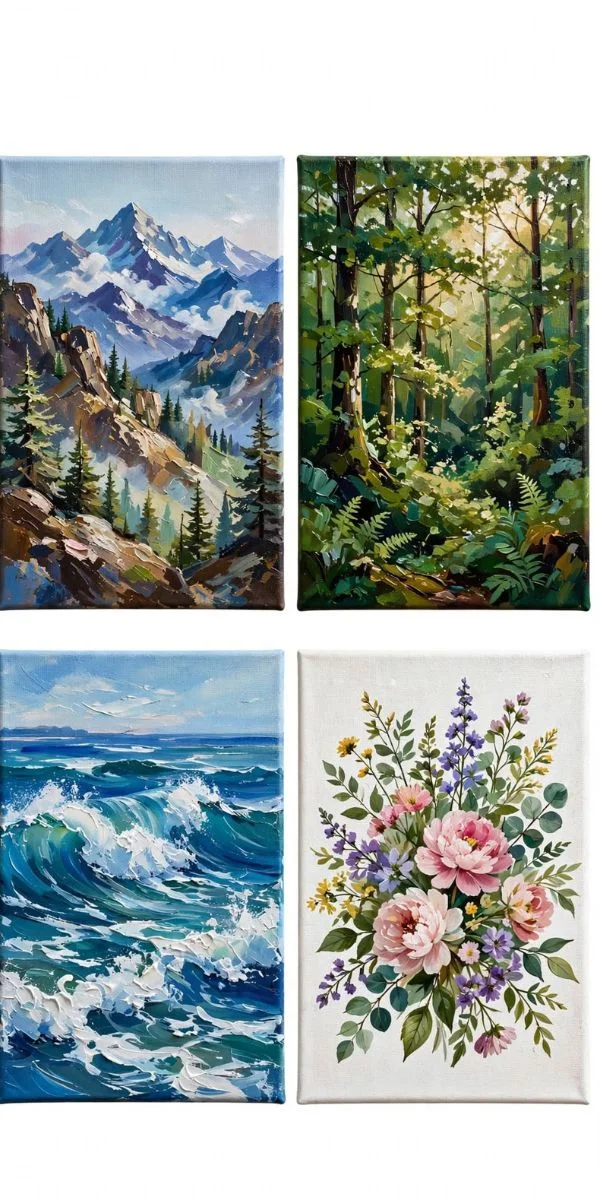
3. Mountain and Lake Scene
Create distant mountains using simple triangular or irregular shapes. Add a lake underneath and reflect some of the mountain colors in the water.
A few horizontal brushstrokes can suggest gentle movement across the lake.
For a more atmospheric appearance, use lighter colors for distant mountains and darker tones for objects closer to the viewer.
4. Botanical Leaves
A botanical canvas does not need to be complicated. Paint several stems with long, curved leaves and arrange them across the canvas.
Try different greens or introduce muted colors such as blue-green, olive, or sage.
Leaving generous areas of blank canvas between the branches can give the finished artwork a clean decorative appearance.
5. Ocean Wave Canvas
Paint flowing blue and turquoise waves across the canvas using curved brushstrokes. Add white paint along the wave crests to suggest foam.
You can keep the background simple or include a soft horizon and sky.
This project is particularly suitable for experimenting with blending and directional brushwork.
Floral and Colorful Canvas Ideas:
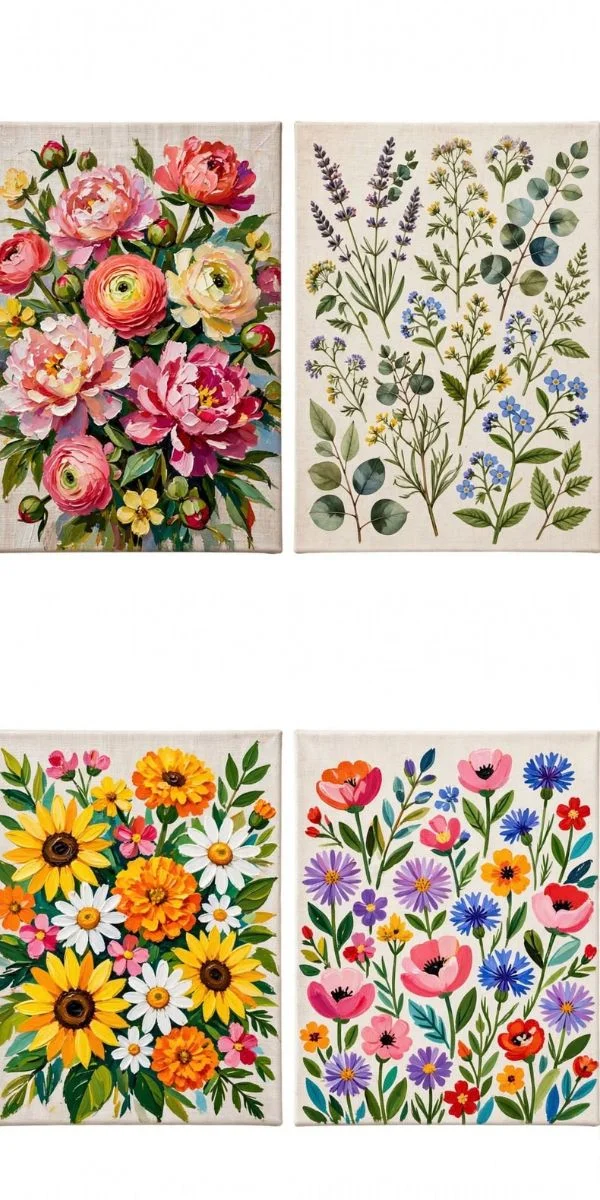
6. Large Sunflower
A large sunflower can become the main focal point of a canvas. Start with a brown or dark center and build yellow petals around it.
Use two or three yellow shades to create variation. Add a green stem and broad leaves underneath.
The petals do not need identical shapes. Slight differences can make the flower appear more natural.
7. Abstract Flower Bouquet
Instead of painting realistic flowers, create a loose bouquet using circles, curved lines, dots, and simple petals.
Use several coordinating colors and add green stems underneath.
This approach allows you to focus on composition and color rather than precise botanical details.
8. Cherry Blossom Branch
Paint a dark, curved branch extending across one side of the canvas. Add clusters of pink or white blossoms along the smaller branches.
A pale blue, cream, or soft pink background can complement the flowers.
Small dots and five-petal shapes are enough to suggest blossoms without painting every detail.
9. Colorful Poppy Field
Create a field filled with red, orange, pink, or yellow poppies. Use loose brushstrokes for the flowers and green strokes for the stems.
Place larger flowers toward the front and smaller marks farther away.
This simple size variation can make the field appear deeper.
10. Rainbow Floral Canvas
Combine rainbow colors with simple flowers. Paint flowers in different shades across the canvas and arrange them in a gentle color progression.
You can add leaves, small dots, butterflies, or decorative swirls.
This is an excellent option when you want cheerful wall art with plenty of color.
Abstract and Modern Canvas Painting Ideas:
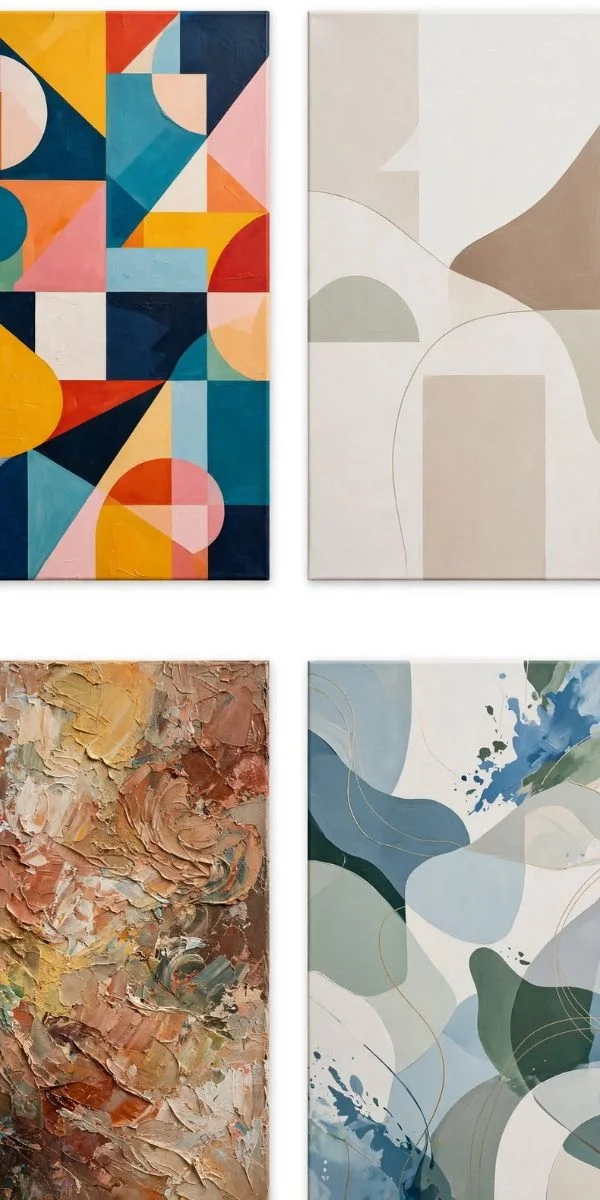
11. Geometric Color Blocks
Create a modern composition from squares, rectangles, triangles, and circles. Use masking tape to create clean edges between larger sections if desired.
Choose a small group of colors instead of using every shade available.
The simplicity of geometric forms makes this project accessible while still producing a contemporary-looking piece.
12. Abstract Swirls
Cover the canvas with flowing curves and circular brush movements. Allow several colors to overlap while leaving portions of the base visible.
You can work from one corner toward the opposite side or build the composition around a central swirl.
There is no need for the painting to represent a specific object.
13. Minimalist Line Art
Choose a simple subject such as a face, flower, hand, sun, or plant and represent it with a continuous-looking line.
Use a neutral background and one contrasting paint color for a minimalist appearance.
The finished canvas can be simple while still having a strong visual presence.
14. Ombre Color Canvas
Create a smooth transition from one color to another across the canvas. For example, blend deep blue into lighter blue, pink into orange, or purple into lavender.
Work while the paint is still wet enough to blend, depending on the type of paint being used.
This idea is particularly useful for practicing gradual color transitions.
15. Dotted Abstract Art
Use the end of a brush, cotton swabs, or other suitable tools to create clusters of painted dots.
Arrange the dots in circles, waves, flowers, or completely random patterns.
Varying dot sizes can make a simple composition more dynamic.
Animal, Space, and Imaginative Canvas Ideas:
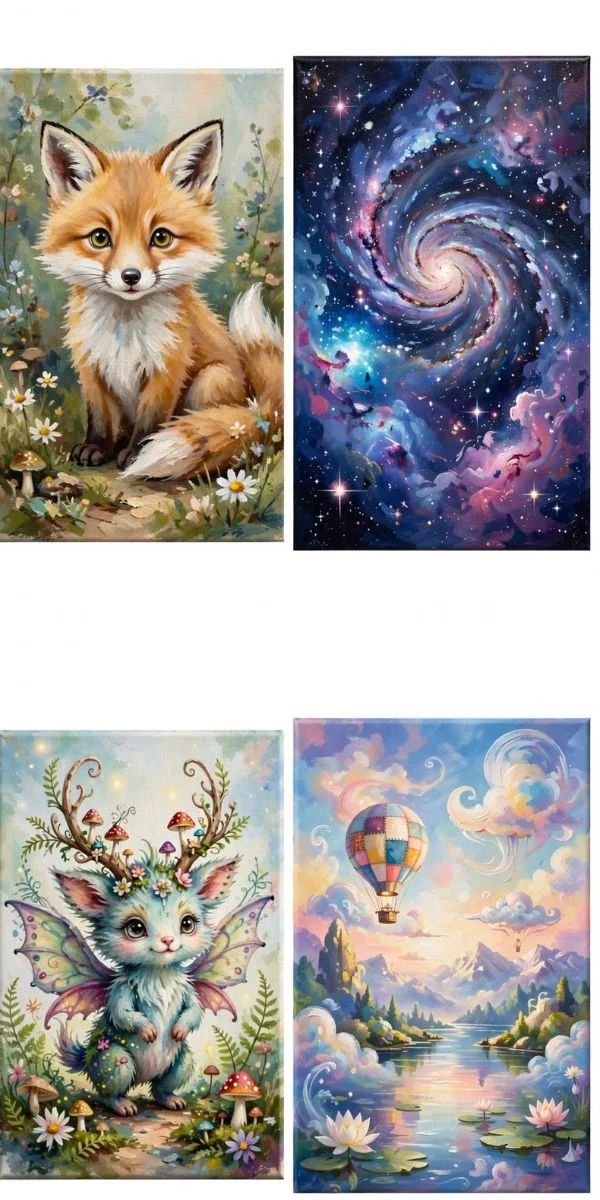
16. Butterfly Canvas
Paint one large butterfly in the center of the canvas or create several smaller butterflies.
Use symmetrical patterns on the wings with contrasting colors. Add tiny dots and curved lines for extra detail.
A soft background can help the butterfly remain the main focus.
17. Cute Cat Portrait
A simplified cat portrait can be created using basic shapes. Begin with the head, pointed ears, large eyes, nose, and whiskers.
You can use realistic colors or create an imaginative cat using purple, blue, pink, or other unusual shades.
Keep the background simple so the face remains prominent.
18. Underwater World
Transform the canvas into a miniature underwater scene with fish, coral, seaweed, bubbles, and shells.
Use different shades of blue for the water and brighter colors for the creatures.
Layering larger objects in front of smaller background elements can make the underwater scene feel more spacious.
19. Galaxy and Stars
Create a dramatic night-sky canvas using dark blues, purple, black, and lighter highlights. Blend sections of the background and add stars using small dots.
You can include planets, a crescent moon, or a distant silhouette of mountains.
For a beginner-friendly version, focus on color blending and a simple collection of stars rather than trying to recreate a realistic galaxy.
20. Whimsical Hot Air Balloons
Paint several hot air balloons floating across a soft sky. Each balloon can have a different pattern, such as stripes, dots, hearts, or geometric shapes.
Make the balloons smaller as they move toward the horizon to create a sense of distance.
Clouds underneath or around them can complete the cheerful composition.
Choosing the Right Canvas
Canvas Size
A small canvas is convenient for quick projects and beginners. Larger canvases provide more space for landscapes, detailed scenes, and large decorative designs.
For a first project, a medium-sized canvas can offer enough working space without becoming difficult to manage.
Canvas Texture
Different canvases have different surface textures. A smoother surface can be helpful for fine details, while a more textured canvas can add character to broad brushstrokes.
The ideal surface depends on the type of artwork and paint being used.
Helpful Canvas Painting Techniques
Layering
Build the painting gradually instead of trying to complete everything at once. Background colors can usually be established first, followed by larger shapes and then smaller details.
Allowing layers to dry when necessary helps prevent unwanted mixing.
Blending
Blending is useful for skies, sunsets, oceans, and abstract backgrounds. Work with compatible colors and blend carefully before the paint becomes too dry.
Practice on a small area if you are unfamiliar with the paint.
Dry Brushing
Dry brushing uses a relatively small amount of paint on a brush to create a textured effect. It can be useful for clouds, grass, wood, rocks, and highlights.
The technique works especially well when you want some of the canvas texture to remain visible.
Stippling
Stippling creates images from small dots or short marks. It works nicely for flowers, foliage, stars, textured backgrounds, and abstract artwork.
Changing the size and spacing of the dots can create different visual effects.
Interesting Facts About Canvas Painting
Canvas is traditionally associated with durable woven fabric surfaces, particularly cotton and linen. Modern artists also use prepared canvas panels and other manufactured surfaces.
A canvas can be stretched over a frame or attached to a rigid panel. These formats provide different working experiences and display options.
Acrylic paint is popular for beginner canvas projects because it is water-based and generally dries relatively quickly. Oil paint behaves differently and can remain workable for much longer.
Canvas texture can affect how a brush moves and how paint sits on the surface. This means the same technique may look different on a smooth panel compared with a heavily textured canvas.
Tips for Better Canvas Paintings
Plan the Main Composition
Before applying paint, lightly sketch the major shapes if the design requires it. Identifying the focal point first can make the painting easier to organize.
Use a Limited Color Palette
Using too many unrelated colors can make a painting look visually busy. Choosing three to six main colors can help the artwork feel more cohesive.
Work From Large to Small
Start with the background and larger forms before adding tiny details. This approach makes it easier to adjust proportions and maintain a clear composition.
Protect the Finished Artwork
Once the painting is completely dry, follow the recommendations for the specific paint used. Some artworks can be protected with an appropriate varnish or finishing medium, while others may not require one.
Frequently Asked Questions
What are easy painting ideas on canvas for beginners?
Simple sunsets, botanical leaves, abstract swirls, geometric shapes, flowers, mountains, and galaxy backgrounds are good beginner options. They can be created without highly detailed drawing skills.
What paint is best for canvas?
Acrylic and oil paints are both commonly used on canvas. Acrylic is often convenient for beginners because it is water-based and typically dries faster, while oil paint offers a longer working time.
Should I sketch before painting on canvas?
A light preliminary sketch can be helpful, especially for landscapes, animals, or objects that need specific proportions. For abstract artwork, sketching may not be necessary.
How do I start a canvas painting?
Begin by choosing your subject and deciding on the main composition. Establish the background first, then add large shapes before working toward smaller details.
Can I paint directly on a blank canvas?
Yes. Prepared canvases are designed to provide a suitable surface for painting. Check the manufacturer’s instructions to determine which types of paint are appropriate.
What canvas size is good for beginners?
A small or medium canvas is usually easier to manage for a first project. It provides enough room for experimentation without requiring a large composition.
How can I make my canvas painting look more professional?
Pay attention to composition, color harmony, layering, edges, and contrast. Building the artwork gradually and adding details selectively can also improve the final appearance.
Can kids paint on canvas?
Yes. Simple canvas projects can be adapted for children using age-appropriate, non-toxic art materials and suitable supervision.
How long does a canvas painting take to dry?
Drying time depends on the type and thickness of paint, environmental conditions, and the painting surface. Acrylic generally dries faster than oil paint, while thick applications can take longer.