30 Painting For Kids Activities | Fun & Creative Ideas
Painting is a creative activity that gives children a simple way to experiment with colors, shapes, textures, and patterns. Painting for Kids Activities can be adapted for toddlers, preschoolers, and school-age children by changing the tools, materials, and level of detail.
Children do not need professional art supplies to enjoy painting. Paper, cardboard, cotton swabs, sponges, leaves, recycled containers, and even vegetables can become useful painting tools. The activities below are divided into four categories, including easy process art, nature-inspired projects, creative tool painting, and themed activities.
Easy Painting for Kids Activities:

1. Rainbow Sponge Painting
Turn a simple kitchen sponge into a rainbow-printing tool. This activity introduces children to color combinations while allowing them to create repeated patterns.
Activity Details
Cut or use a clean sponge with a suitable shape and apply several washable paint colors across its surface. Children can press it onto paper to create colorful rainbow prints. Younger children can focus on identifying colors, while older kids can experiment with overlapping shades.
2. Fingerprint Flower Painting
Fingerprint painting gives children a direct and tactile way to create artwork.
Activity Details
Draw or paint simple flower stems on paper and let children use their fingertips to create flower petals. Different colors can be combined to make gardens filled with unique flowers.
3. Cotton Swab Dot Painting
Cotton swabs are useful for making small, repeated dots without requiring advanced painting skills.
Activity Details
Give children several paint colors and a sheet of paper. They can create flowers, balloons, animals, abstract patterns, or colorful borders using dots. The activity also encourages children to control where each mark is placed.
4. Bubble Wrap Painting
Bubble wrap creates a naturally textured print that children can use to make unusual backgrounds.
Activity Details
Apply washable paint to the bubble side of clean bubble wrap, place paper over it, and gently press. Remove the paper to reveal the pattern. Children can then add drawings or painted details on top.
5. Hanrint Animal Painting
Transform children’s hanrints into simple animals for a memorable art project.
Activity Details
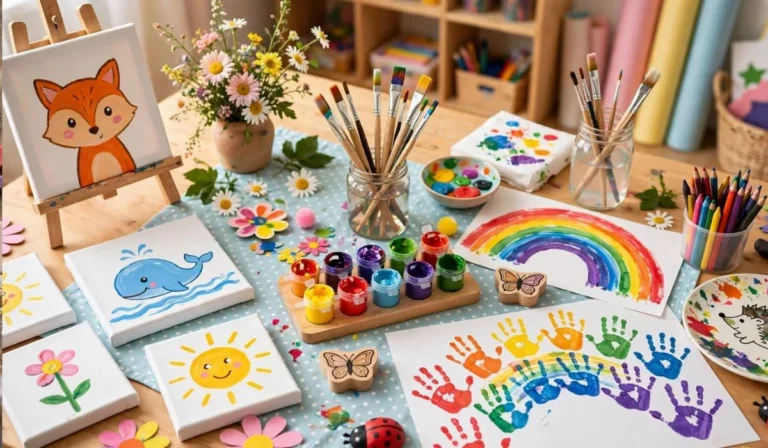
Paint the palm and fingers with washable paint and press the hand onto paper. Once dry, add eyes, ears, tails, legs, or other features with a small brush or marker.
6. Shape Stamp Painting
Use basic shapes to create colorful pictures.
Activity Details
Cut circles, triangles, squares, and other shapes from clean sponges or sturdy craft materials. Children can dip them in paint and combine the prints to create houses, robots, flowers, or abstract designs.
7. Straw Blow Painting
Blow painting creates branching patterns that resemble trees, coral, fireworks, or abstract lines.
Activity Details
Place a small amount of diluted washable paint on paper and have children gently blow through a straw to move the paint. Younger children should be closely supervised, and the activity should emphasize blowing rather than sucking.
8. Fork Painting
A plastic fork can create repeated lines that resemble feathers, flowers, grass, or fireworks.
Activity Details
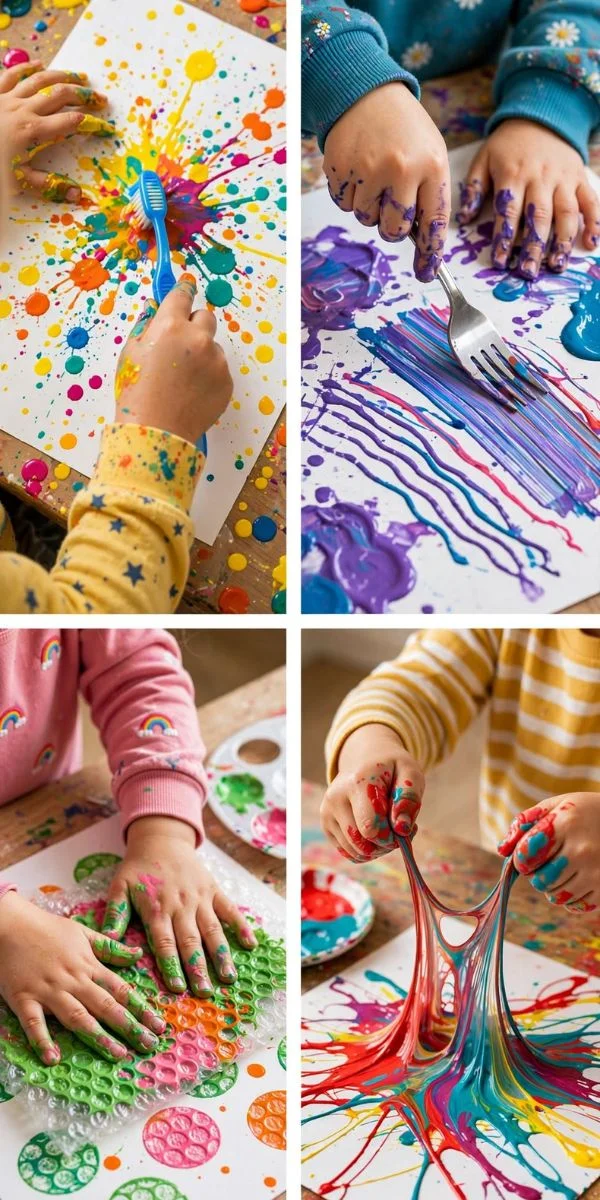
Dip the back or tines of a clean plastic fork into paint and press it onto paper. Experiment with different colors and directions to create layered textures.
Nature-Inspired Painting Activities:
9. Leaf Print Painting
Leaves provide natural shapes and textures for making prints.
Activity Details
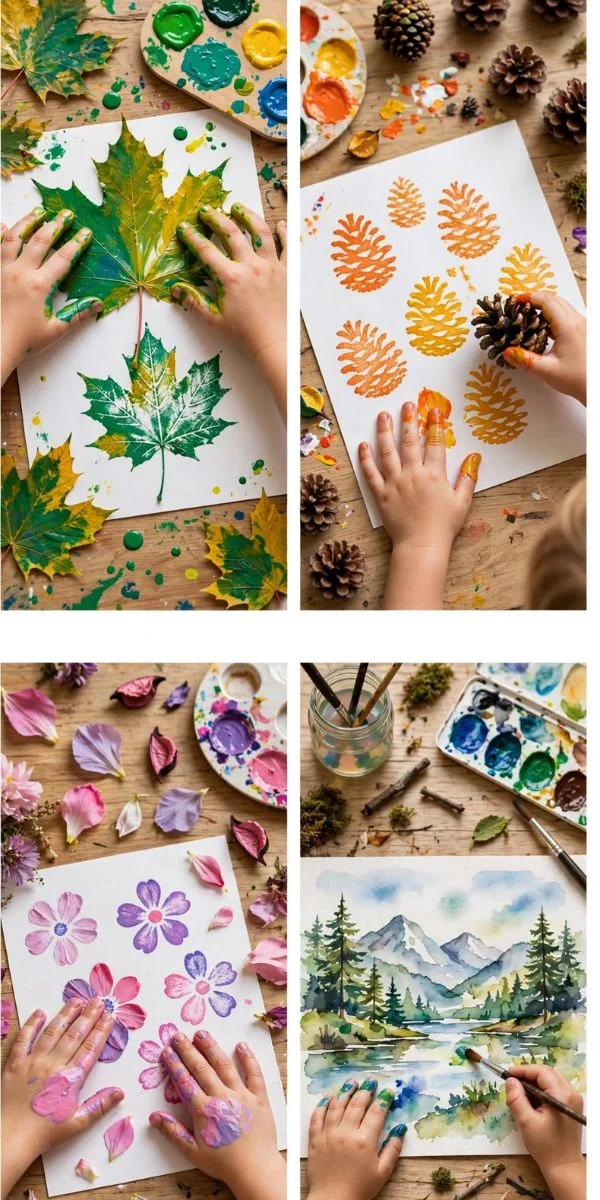
Brush washable paint lightly onto the textured side of a leaf and press it onto paper. Children can use several leaf shapes and colors to create an autumn scene, garden, or abstract collage.
10. Flower Petal Painting
Fresh or artificial flowers can become unusual painting tools.
Activity Details
Dip flower petals or the ends of suitable flowers into washable paint and press them onto paper. Arrange the prints into bouquets, patterns, or imaginative landscapes.
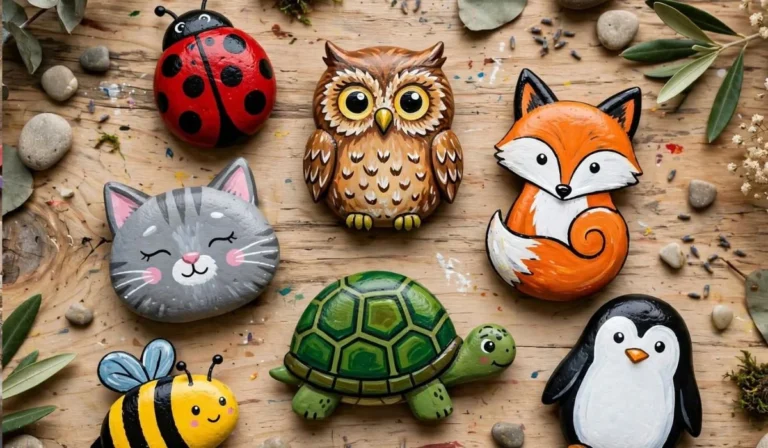
11. Rock Painting for Kids
Painting smooth stones allows children to create small pieces of portable artwork.
Activity Details
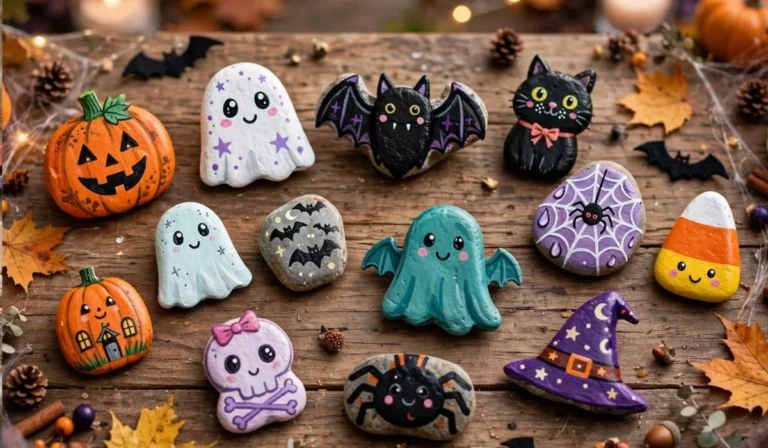
Clean smooth rocks before starting and let them dry. Children can paint simple faces, ladybugs, rainbows, flowers, hearts, or colorful patterns using child-appropriate paints.
12. Nature Brush Painting
Instead of conventional brushes, collect safe natural materials such as grass, pine needles, or sturdy leaves.
Activity Details
Dip the natural materials lightly into paint and drag or stamp them across paper. Different materials produce different marks, allowing children to compare textures.
13. Pinecone Painting
Pinecones are naturally textured objects that can create interesting three-dimensional painting projects.
Activity Details
Children can brush paint onto individual scales or lightly cover the entire pinecone. Once dry, the pinecone can become a colorful decoration or part of a larger nature-themed craft.
14. Sun and Sky Nature Painting
Create a simple landscape inspired by outdoor observations.
Activity Details
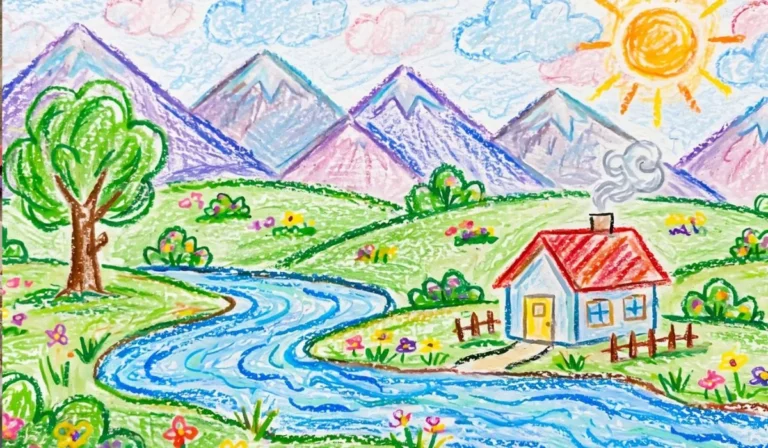
Ask children to paint a sky, sun, clouds, trees, grass, or flowers. Encourage them to choose their own colors instead of requiring realistic shades, making the project more exploratory.
15. Leaf Creature Painting
Turn individual leaves into imaginative animals or characters.
Activity Details
Glue or place a leaf on paper and add painted eyes, legs, wings, tails, or patterns. Children can decide what creature their leaf resembles, encouraging storytelling alongside art.
16. Mud and Earth Tone Painting
Introduce natural-looking colors through a simple earth-inspired painting project.
Activity Details
Use washable brown, green, tan, gray, and blue paints to create trees, mountains, soil, rivers, or abstract landscapes. Discuss how different colors can represent parts of nature.
Creative Tool Painting for Kids:
17. Balloon Stamp Painting
Balloons can make large rounded prints that are easy for young children to handle.
Activity Details
Inflate a balloon to a manageable size and tie it securely. Apply washable paint to part of the balloon and gently press it onto paper. Multiple colors can create overlapping circular patterns.
18. Sponge Shape Painting
Make painting more interactive by giving children sponges in different shapes.
Activity Details
Use star, heart, circle, or animal-shaped sponges. Children can repeat the prints to create wrapping-paper-style patterns or build pictures from individual shapes.
19. Cardboard Roll Painting
Empty cardboard rolls can be transformed into simple painting stamps.
Activity Details
Press or bend the end of a clean cardboard roll into different shapes. A circle can create rings, while a flattened or folded end can make more unusual prints. Use washable paint and a sturdy sheet of paper.
20. Toothbrush Splatter Painting
A clean old toothbrush can create tiny splatter effects.
Activity Details
Load the toothbrush lightly with washable paint and gently flick the bristles over paper. Use contrasting colors to create stars, rain, rainbows, or abstract backgrounds. Protect the work surface because splatter can spread beyond the paper.
21. Comb Texture Painting
A plastic comb can drag wet paint into repeated lines.
Activity Details
Place a small amount of paint on paper and gently pull the comb through it. Children can create waves, grass, hair, rain, or abstract textures by changing the direction of the strokes.
22. Bubble Painting
Combine bubbles and washable paint to create airy circular patterns.
Activity Details
Mix a small amount of washable paint into a child-safe bubble solution, then use a suitable bubble wand to blow bubbles onto paper. Children should avoid putting the painted solution in their mouths.
23. Q-Tip Pattern Painting
Cotton swabs can be used to create controlled patterns without traditional brush strokes.
Activity Details
Children can make dots in rows, spirals, flowers, clouds, or geometric designs. Try giving them one color at a time before introducing multiple colors for more structured pattern practice.
Themed Painting for Kids Activities:

24. Rainbow Painting
Rainbows are an easy theme for introducing color sequencing.
Activity Details
Children can paint curved bands using different colors or create an imaginative rainbow filled with clouds, stars, animals, or houses. Younger children can focus on large brush strokes rather than perfect arcs.
25. Underwater Painting
Create an underwater world filled with fish, plants, bubbles, and colorful sea creatures.
Activity Details
Paint the background in shades of blue before adding fish and sea plants. Children can use fingerprints, sponge prints, or brushes to create the different elements.
26. Space Painting
Turn a dark sheet of paper into an imaginary outer-space scene.
Activity Details
Use dark blue, purple, or black paper as the background. Add painted planets, stars, moons, rockets, and colorful galaxies. White dots can create simple stars, while sponge dabbing can produce cloudy galaxy effects.
27. Dinosaur Painting
Dinosaur painting can combine art with imaginative storytelling.
Activity Details
Children can paint dinosaurs in realistic or completely invented colors. Add mountains, plants, volcanoes, footprints, and clouds to create a prehistoric scene.
28. Seasonal Tree Painting
Create a tree that changes appearance according to the season.
Activity Details
Paint a simple trunk and branches, then use different techniques for the leaves. Fingerprints can become spring blossoms, green dots can represent summer leaves, orange and red marks can create autumn foliage, and white dots can represent snow.
29. Monster Painting
Let children invent their own friendly monsters.
Activity Details
Give them a selection of bright colors and encourage them to choose the monster’s number of eyes, arms, legs, horns, spots, and expressions. There is no required final shape, making this a good open-ended activity.
30. Storybook Scene Painting
Combine painting with storytelling by asking children to create a scene from a favorite type of story.
Activity Details
Instead of requiring a specific character, encourage children to paint a castle, forest, spaceship, farm, underwater kingdom, or imaginary world. After finishing, ask them to describe what is happening in their picture.
Choosing Safe Painting Materials for Kids
For young children, washable, child-appropriate paints are generally easier to manage than permanent art products. Check the manufacturer’s age guidance and use materials according to their instructions.
Keep small objects, paints, and tools away from children who may put materials into their mouths. Adult supervision is particularly important for toddlers and preschoolers.
Painting Activities by Age
Toddlers often benefit from large movements, finger painting, sponge prints, and simple stamping. Preschoolers can begin experimenting with patterns, recognizable objects, and basic scenes.
School-age children may enjoy more structured projects such as landscapes, nature prints, space scenes, or mixed-media painting. The same activity can often be simplified or expanded depending on the child’s abilities.
How to Set Up a Kids’ Painting Area
Cover the table with washable protection or reusable craft mats. Provide aprons or old clothing and place paper where children can work comfortably.
Keep only the colors and tools needed for the particular activity within reach. A small water container, paper towels, and a drying area can also make cleanup easier.
Ways to Encourage Creativity
Try not to correct children’s color choices or require their paintings to look a particular way. Open-ended instructions such as “Create an animal,” “Paint something from nature,” or “Invent a new world” allow children to make independent choices.
You can also ask questions about the artwork rather than judging it. Asking what a character is doing or what inspired a color choice can turn painting into a conversation and storytelling activity.
FAQs About Painting for Kids Activities
What is the easiest painting activity for kids?
Finger painting, sponge stamping, cotton-swab painting, and simple shape stamping are easy starting points because children can create artwork without needing precise brush control.
What paint is suitable for children?
Washable, child-appropriate paints are convenient for many children’s activities. Always check the product label for age recommendations and safety instructions.
What can kids use instead of paintbrushes?
Children can use sponges, cotton swabs, leaves, cardboard rolls, clean forks, balloons, and other suitable household or craft materials to create different textures and prints.
How can I make painting less messy?
Cover the work surface, use washable materials, provide a limited amount of paint, and keep paper towels nearby. Outdoor painting can also be useful for activities involving splattering.
Are painting activities educational?
Painting can give children opportunities to explore colors, patterns, textures, hand movements, observation, and creative decision-making while making artwork.
What painting activities are good for preschoolers?
Fingerprint flowers, sponge painting, leaf prints, rainbow painting, hanrint animals, cotton-swab art, and simple nature scenes are accessible options for many preschool-age children.
How can I make painting interesting for older kids?
Introduce themes, unusual tools, storytelling, mixed techniques, and more detailed scenes. Space art, landscapes, nature printing, abstract painting, and character design can provide additional challenges.
Should children copy a painting or create their own?
Both approaches can be useful. Guided projects can teach specific techniques, while open-ended painting gives children more freedom to experiment and develop their own ideas.