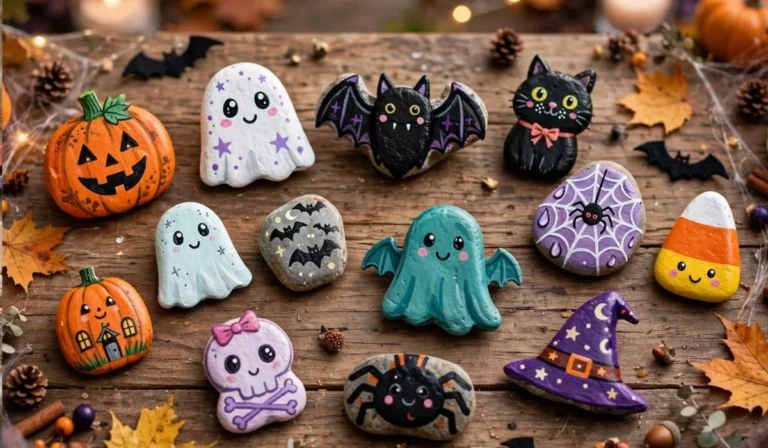
20 Painted Rocks Ideas Animals | Cute & Creative Designs
Animal rock painting is a fun way to turn ordinary stones into colorful little characters. Painted Rocks Ideas Animals can range from simple ladybugs and fish to more detailed owls, foxes, turtles, and penguins. Because rocks come in many natural shapes, children and beginners can choose a stone that already resembles the animal they want to create.
These projects can be used for kids’ crafts, garden decorations, classroom activities, handmade gifts, or simple weekend art sessions. Acrylic paint, paint pens, and small brushes are enough for many of the designs below.
Cute and Easy Animal Painted Rocks:
1. Ladybug Rock
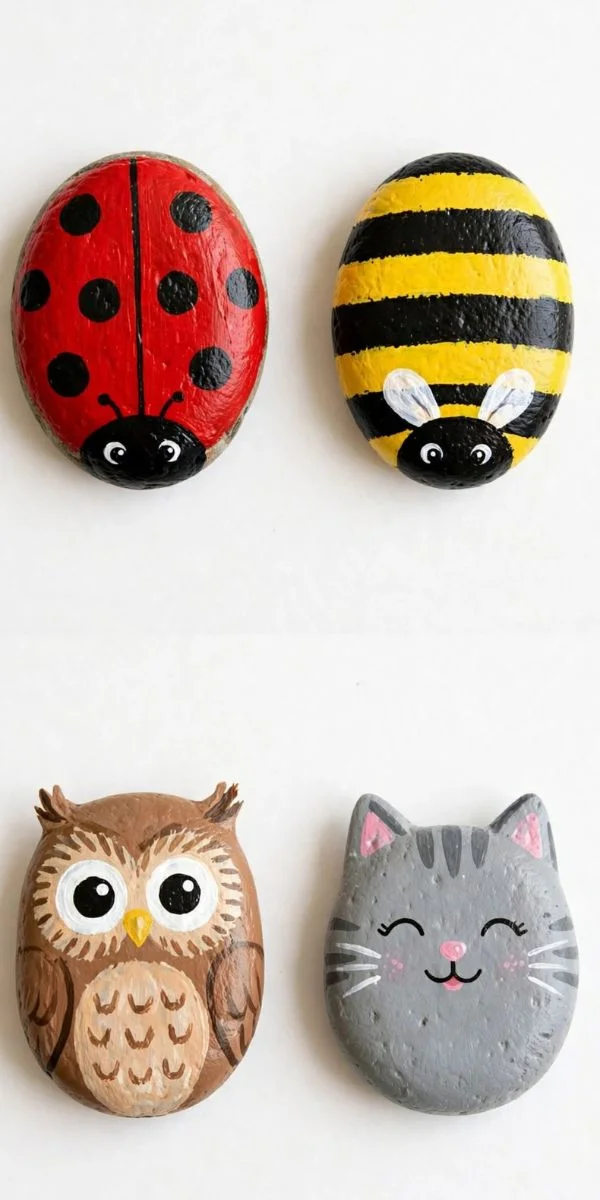
A ladybug is one of the easiest animals to paint because its body can be represented by a simple oval shape.
Painting Details
Paint a rounded rock bright red and let it dry. Add a black head, central dividing line, and small black spots. Two tiny white dots can become highlights in the eyes.
2. Cute Cat Rock
Turn a smooth oval stone into a simple cat face using just a few colors.
Painting Details
Use orange, gray, cream, black, or any color you like for the face. Paint two triangular ears at the top and add eyes, a small nose, whiskers, and a curved mouth with a fine brush or paint pen.
3. Little Turtle Rock
The natural rounded shape of a rock works perfectly for a turtle shell.
Painting Details
Paint the shell green or brown and create a pattern of connected curved sections. Add a small head, four feet, and a tiny tail. A lighter green can be used for the turtle’s face and legs.
4. Penguin Rock
A black-and-white penguin is easy to recognize even with simple shapes.
Painting Details
Paint the rock black, leaving or adding a white oval area on the front. Add two small eyes and an orange beak. Orange feet at the bottom can give the character a playful appearance.
5. Little Bee Rock
A bee design works especially well on small oval stones.
Painting Details
Paint alternating yellow and black stripes across the rock. Add white or pale-blue wings and two small eyes near the front. A thin black outline can make the body details clearer.
Woodland Animal Rock Painting Ideas:
6. Fox Rock
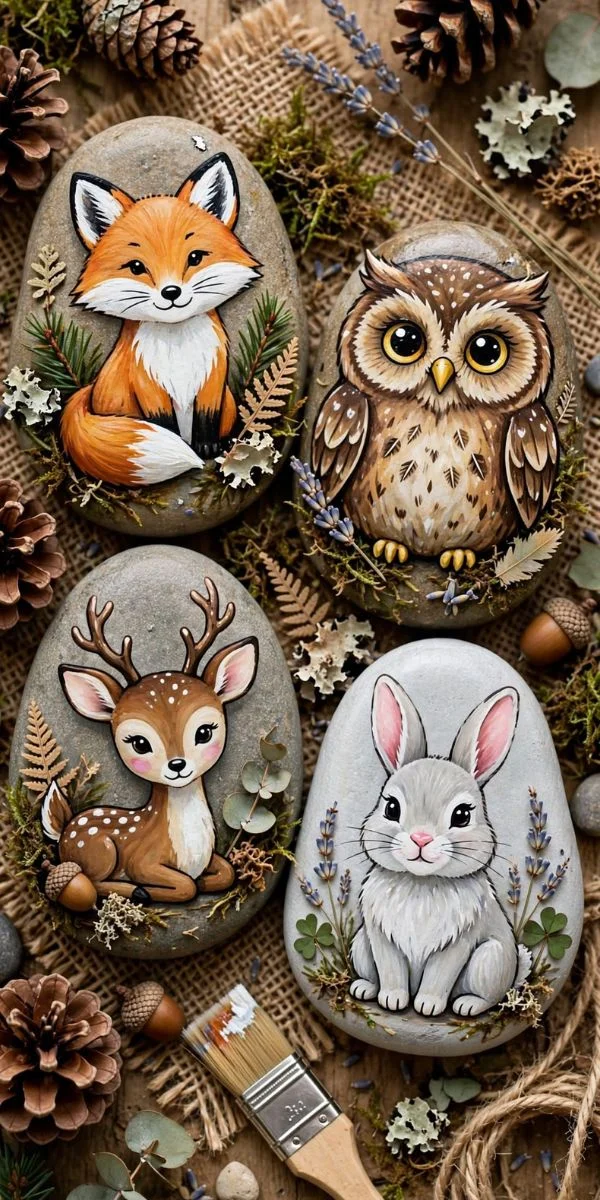
A fox can be created with a combination of orange, white, and black shapes.
Painting Details
Use orange as the main color and paint the lower face white. Add pointed ears, dark eyes, a small black nose, and a white-tipped tail if you want a full-body design.
7. Owl Rock
Owls offer plenty of opportunities for patterns and large expressive eyes.
Painting Details
Paint the body brown, gray, or even purple. Add two large circular eyes with yellow or orange irises and a small triangular beak. Feather patterns can be created with short curved strokes.
8. Hedgehog Rock
A hedgehog can be painted using a simple oval body and repeated short strokes.
Painting Details
Use brown or tan for the face and darker brown for the spines. Add a black nose, small eye, and tiny feet. Layering several shades can make the spiny body more textured.
9. Deer Rock
A deer face makes a charming woodland-themed painted rock.
Painting Details
Use tan or warm brown for the face and darker brown for the ears and antlers. Add large black eyes and a small dark nose. White dots or small patches can create a traditional deer pattern.
10. Bear Rock
A bear face can be simplified into a few large shapes, making it suitable for beginners.
Painting Details
Paint the rock brown and add two rounded ears. Use a lighter tan or cream shape for the muzzle, followed by a black nose and small eyes. A friendly smile can complete the character.
Colorful Animal Painted Rocks:
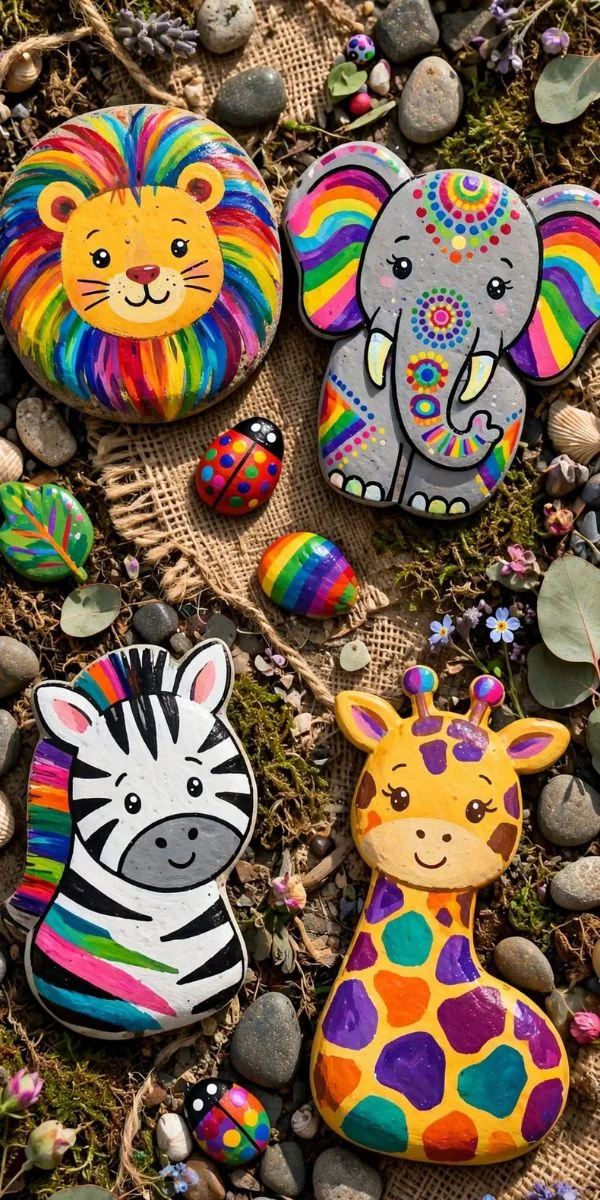
11. Rainbow Fish Rock
Create a cheerful fish using several bright colors.
Painting Details
Paint the body blue, yellow, pink, green, or a combination of shades. Add a large eye, simple scales, and a contrasting tail. Small white dots can create bubbles around the fish.
12. Colorful Butterfly Rock
A butterfly allows children to experiment with symmetrical patterns.
Painting Details
Use two or more bright colors for the wings. Add black outlines and small decorative dots or stripes. A thin black body and antennae complete the design.
13. Peacock Rock
A peacock-inspired stone can showcase bright blues and greens.
Painting Details
Paint the body blue and create several green or teal tail feathers behind it. Add small circular “eye” patterns to the feathers using contrasting colors.
14. Tropical Parrot Rock
A parrot rock can be filled with vivid colors.
Painting Details
Use red, yellow, green, blue, and orange for the feathers. Add a curved beak and a dark eye. Because parrots have colorful plumage, children can invent their own color combinations.
15. Rainbow Snail Rock
A snail provides a fun opportunity to create a colorful spiral shell.
Painting Details
Paint the shell with several colors and add a large spiral pattern. Use beige, green, or pink for the body and add two antennae with small eyes at the ends.
Ocean and Small Animal Rock Ideas:
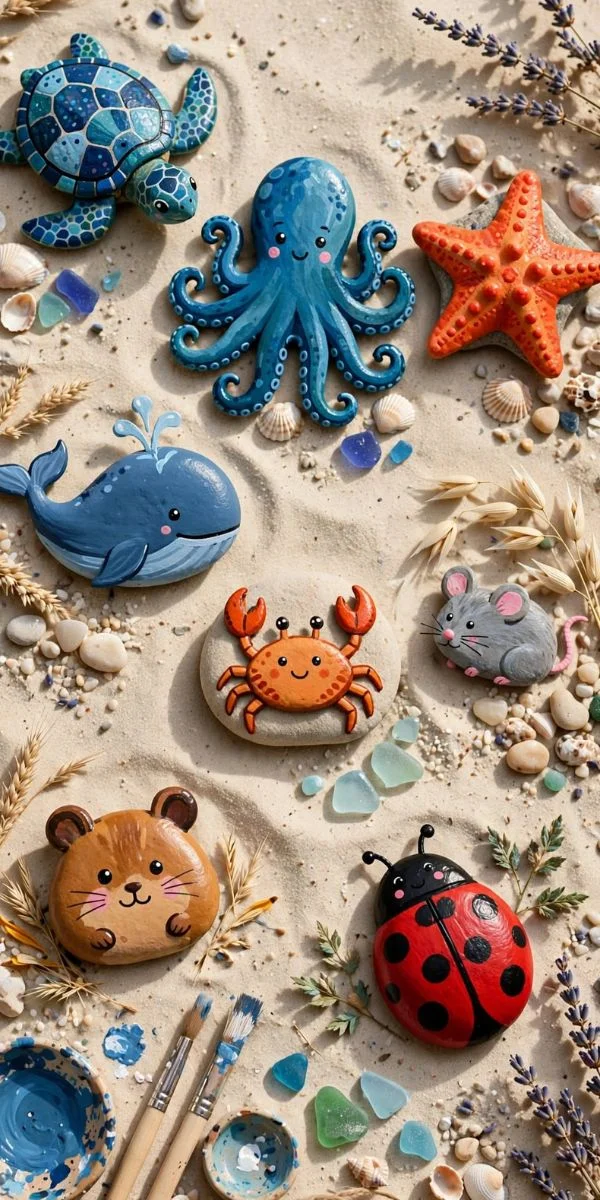
16. Whale Rock
A whale silhouette can be painted easily on a longer stone.
Painting Details
Use navy, blue, or gray for the body and add a lighter belly. Paint a small water spout above the head and use white or light-blue highlights to suggest movement.
17. Octopus Rock
A rounded rock can become an octopus head with painted tentacles extending toward the bottom.
Painting Details
Choose purple, coral, blue, or pink for the body. Paint eight simple tentacles and add small circular suction-cup details if desired. Large eyes can make the character look cute rather than realistic.
18. Frog Rock
Green frogs are recognizable with only a few basic details.
Painting Details
Paint the stone green and add two raised-looking eye circles near the top. Use black pupils and a lighter green or yellow belly. A wide curved smile gives the frog a friendly expression.
19. Flamingo Rock
A pink flamingo creates a bright and elegant animal design.
Painting Details
Paint the body pink and use a thin brush to create the curved neck. Add a black-tipped beak and one thin leg. A pale-blue or cream background can provide contrast.
20. Panda Rock
A panda’s black-and-white pattern makes it particularly suitable for rock painting.
Painting Details
Paint the main body white and add black ears, eye patches, arms, and legs. Use a small brush for the facial details. A bamboo leaf or two beside the panda can turn the design into a simple scene.
Choosing the Right Rock for Animal Painting
The shape of the rock can influence the final animal design. Rounded stones are useful for turtles, ladybugs, frogs, and faces, while longer rocks can work well for whales, foxes, or full-body animals.
Look for stones with a relatively smooth surface and avoid pieces with loose dirt or unstable layers. Wash the rock and allow it to dry completely before painting.
Useful Supplies for Animal Rock Painting
A basic setup does not require many materials. Consider using:
- Acrylic paint
- Small round brushes
- Fine-detail brushes
- Paint pens
- Pencil for light sketching
- Water container
- Paper towels
- Protective table covering
- Suitable clear sealer
Use child-appropriate materials for children’s projects and follow the manufacturer’s instructions.
How to Paint an Animal Rock
Begin with the largest area of color rather than starting with tiny details. Once the base coat has dried, add the main animal shapes, followed by outlines and facial features.
Finally, add small highlights, patterns, spots, stripes, or environmental details. Allow the finished artwork to dry completely before handling or sealing it.
Simple Animal Designs for Beginners
If you are new to rock painting, start with animals based on simple shapes. Ladybugs, bees, penguins, frogs, turtles, and pandas can be constructed from circles, ovals, stripes, and basic facial features.
As your brush control improves, try more detailed animals such as foxes, owls, deer, peacocks, or flamingos.
Making Animal Rocks More Expressive
Small changes to the eyes and mouth can completely change an animal’s expression. Large round eyes often create a cute appearance, while narrow eyes can make the character look more serious.
You can also add accessories such as tiny hats, scarves, flowers, bows, or seasonal objects. Keep the details proportional to the size of the rock.
How to Protect Painted Animal Rocks
A suitable clear sealer can help protect decorative rocks from moisture, handling, and environmental exposure. The correct product depends on whether the rock will remain indoors or be placed outdoors.
Always let the paint dry fully before applying the sealer and follow the product’s application instructions.
FAQs About Painted Rocks Ideas Animals
What animals are easiest to paint on rocks?
Ladybugs, bees, turtles, frogs, penguins, pandas, and simple cat faces are beginner-friendly because they can be made from basic shapes.
What paint should I use for animal rocks?
Acrylic paint is commonly used for decorative rock painting. Paint pens can also be useful for outlines, eyes, whiskers, and other small details.
Do I need to prime a rock before painting?
Priming is not always necessary, but a suitable base coat can make colors appear more even, especially when the stone is dark or has an uneven surface.
How do I choose a rock for animal painting?
Look for a clean, relatively smooth stone whose shape fits the animal. Round rocks are useful for faces and compact animals, while elongated stones can work well for full-body designs.
Can kids paint animal rocks?
Yes. Simple animals such as ladybugs, fish, turtles, frogs, and bees can be adapted for children’s craft sessions. Use appropriate materials and supervise children during the activity.
Can painted animal rocks go outside?
Decorative painted rocks can be displayed outdoors, but weather exposure may affect the artwork. A suitable outdoor sealer can provide additional protection.
How can I make animal rocks look more professional?
Use several thin paint layers, allow each layer to dry, keep outlines controlled, and add small highlights to the eyes and body. Choosing a rock whose natural shape fits the animal can also improve the finished result.