25 Art Ideas For Toddlers | Fun & Easy Creative Activities
Toddlers are naturally curious about colors, textures, movement, and new materials. Art activities give them a chance to explore those interests while making marks, touching different surfaces, and experimenting with simple cause-and-effect ideas.
The best art ideas for toddlers are usually uncomplicated. They do not need detailed instructions or a perfect finished picture. A piece of paper, washable paint, a sponge, some crayons, or a few large natural materials can provide plenty of creative possibilities.
For toddlers, the process is often more important than the final artwork. Activities should use age-appropriate materials and close adult supervision, especially around paint, water, glue, and anything that could become a choking hazard.
Finger and Hand Painting:

Toddlers often enjoy painting because it allows them to use their hands directly instead of relying on precise tools.
1. Rainbow Finger Painting
Place several small amounts of washable, non-toxic paint on a large sheet of paper. Let toddlers make dots, swirls, lines, and handprints with their fingers.
There is no need to show them exactly what to make. Let them experiment with moving one finger, several fingers, or the whole palm across the paper.
Fact: Finger painting encourages sensory exploration because children can directly feel the texture and temperature of the paint while creating marks.
2. Handprint Garden
Paint a toddler’s palm with washable paint and gently press it onto paper. Once the print dries, add stems, leaves, and flowers around it.
Several handprints can become a colorful garden.
3. Fingerprint Balloons
Draw several simple balloon strings on paper. Toddlers can add colorful fingerprints at the ends to create balloons.
Use different colors and allow some fingerprints to overlap.
4. Handprint Animal Art
Turn a handprint into a simple animal by adding a few drawn details after the paint dries.
A handprint can become a fish, bird, butterfly, or another imaginative character.
Adult help is useful for adding small details because toddlers should not be given tiny loose craft pieces that may be placed in their mouths.
Easy Painting Activities:

Painting tools can introduce toddlers to different types of marks without requiring controlled drawing skills.
5. Sponge Painting
Cut a large clean sponge into easy-to-hold pieces or use a toddler-safe sponge. Dip it lightly into washable paint and press it onto paper.
Try circles, squares, or simple repeated prints.
6. Large Brush Painting
Give toddlers a thick, easy-to-grip paintbrush and a large sheet of paper.
Encourage long strokes, short strokes, curves, and dots. The goal is to explore how different movements create different marks.
7. Water Painting
For an almost mess-free activity, give toddlers a large paintbrush and a container of clean water.
They can “paint” cardboard, a chalkboard, pavement, or another suitable outdoor surface and watch the marks gradually disappear as the water dries.
8. Rolling Paint
Place paper inside a shallow tray and allow a toddler to roll a large washable craft ball or suitable rounded object through a small amount of paint.
The object can then be rolled across the paper to create lines and tracks.
An adult should control the amount of paint and ensure the object is large enough to be safely handled.
Paper-Based Toddler Art:

Paper provides a simple surface for drawing, sticking, tearing, and experimenting with color.
9. Sticker Collage
Give toddlers large, age-appropriate stickers and a sheet of paper.
They can place stickers wherever they want to create a colorful collage.
This is especially useful for children who are beginning to practice peeling and placing objects with their fingers.
10. Large Shape Collage
Prepare large circles, squares, triangles, and other simple paper shapes.
Let toddlers place and glue the shapes onto paper to create their own pictures.
11. Torn Paper Art
Provide larger pieces of soft paper that toddlers can tear with adult supervision.
The torn pieces can be glued onto another sheet to create a colorful abstract collage.
Tearing paper can also give toddlers an opportunity to practice using both hands together.
12. Paper Plate Face
Use a paper plate as the base for a simple face.
Toddlers can add large paper shapes for eyes, hair, ears, and a mouth. Draw details yourself if needed.
Avoid small detachable pieces that could present a choking risk.
Sensory Art for Toddlers:

Sensory art combines creative activity with opportunities to notice texture, movement, sound, or temperature.
13. Texture Painting
Place several safe textured objects beside a sheet of paper. Large sponges, textured rollers, or other toddler-appropriate tools can be dipped into paint.
Pressing each tool onto the paper produces a different surface pattern.
14. Ice Painting
Freeze water with a small amount of child-safe washable coloring or use plain ice with washable paint applied separately.
Let toddlers move the ice across paper while observing how it melts.
Keep the activity supervised and use a washable surface.
Fact: Ice changes from solid to liquid as it absorbs enough heat from its surroundings, which is why it gradually melts during this activity.
15. Soft Fabric Collage
Offer large pieces of fabric with different textures, such as smooth cotton or soft fleece.
Toddlers can touch, compare, and help place the pieces onto paper with adult assistance.
Use only materials appropriate for the child’s age and supervise closely.
16. Cotton Ball Painting
Use large cotton balls with washable paint to create soft, rounded prints.
Toddlers can press the cotton onto paper to make clouds, flowers, snow, or abstract patterns.
Make sure the cotton balls remain under close supervision and are not treated as toys.
Nature-Inspired Toddler Art:
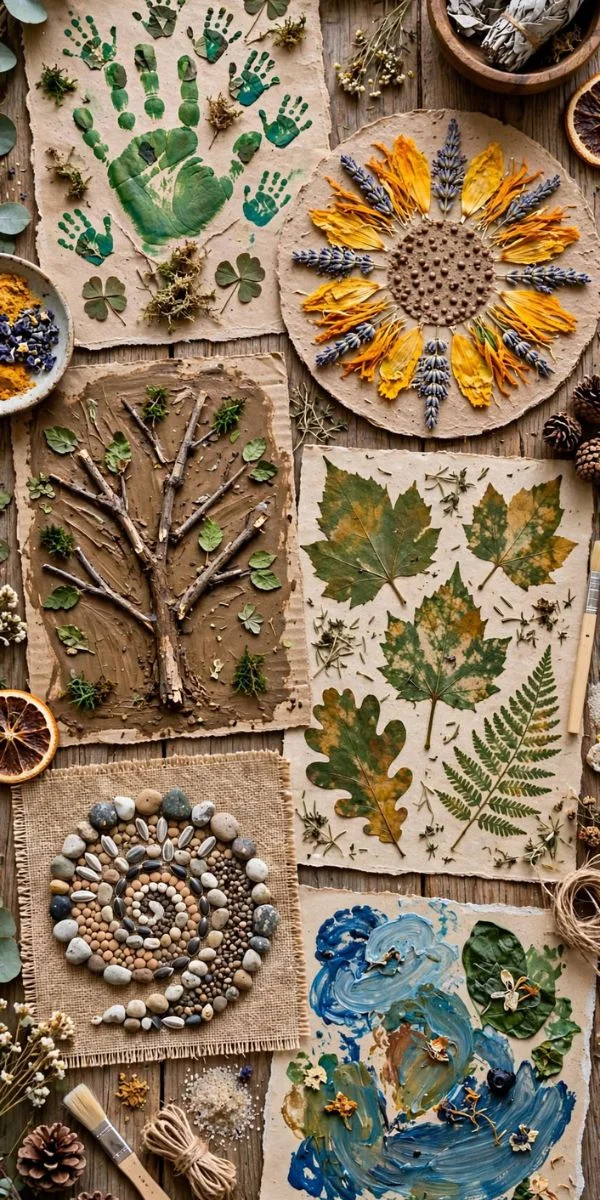
Natural materials can provide interesting colors and textures, but they should always be selected carefully.
17. Leaf Painting
Choose large, clean, non-toxic fallen leaves. Let toddlers help paint the surface with washable paint and press it onto paper.
The leaf creates an interesting outline and vein pattern.
18. Nature Color Collage
Collect large safe natural items such as fallen leaves and arrange them by color.
Create a simple collage by placing the materials onto paper with adult help.
Do not use unknown berries, poisonous plants, sharp objects, or materials that could easily break into small pieces.
19. Flower Petal Art
Use large, safe fallen petals to make simple pictures or patterns.
Arrange the petals into circles, flowers, or abstract shapes before attaching them to paper.
Crayon and Drawing Activities
Toddlers do not need to draw recognizable objects to benefit from drawing.
20. Big Crayon Scribble Art
Give toddlers large, washable, age-appropriate crayons and a large sheet of paper.
Encourage free scribbling with different colors.
21. Tape Resist Drawing
Place strips of painter’s tape on paper to create simple lines or shapes.
Let toddlers color over the paper with crayons or washable markers. Remove the tape with adult assistance to reveal the uncolored areas.
22. Circle Doodle Art
Draw several large circles on a sheet of paper.
Toddlers can add dots, scribbles, lines, or colors inside and around the circles.
This creates a simple framework without requiring them to follow a complicated picture.
Recycled and Everyday Art
Everyday materials can become creative tools when prepared appropriately.
23. Cardboard Box Painting
Use a clean cardboard box as a large painting surface.
Toddlers can paint the outside with washable colors, creating lines, handprints, dots, and broad brush marks.
The large surface gives them more room to move their arms.
24. Cardboard Tube Printing
A large cardboard tube can be used as a simple printing tool under close supervision.
Dip the end lightly into washable paint and press it onto paper to create repeated circles.
25. Kitchen Tool Pattern Art
Some large, clean household tools can create interesting marks when used safely as art tools.
For example, a large silicone utensil or textured kitchen tool can be lightly dipped into washable paint and pressed onto paper.
Choose objects that are large, sturdy, clean, and easy to supervise. Never use sharp, breakable, hot, or small kitchen items.
Making Toddler Art Activities Successful
Toddlers have short attention spans, so an activity does not need to last a long time to be worthwhile. Some children may spend only a few minutes painting before moving on to something else.
Keep the Setup Simple
Prepare the paper and materials before bringing the toddler to the activity. Too many choices can make a simple project unnecessarily complicated.
Offer two or three colors rather than covering the entire table with supplies.
Let Toddlers Explore
Avoid correcting every mark or trying to turn their artwork into a specific object.
If a toddler makes a blue scribble and calls it a tree, there is no need to change it. Their interpretation is part of the creative experience.
Toddler Art Safety Tips
Safety is particularly important because toddlers may still explore objects with their mouths.
Choose Age-Appropriate Supplies
Use washable, non-toxic products intended for children’s use. Avoid small beads, buttons, tiny pom-poms, uncooked dry foods, or other loose pieces that could become choking hazards.
Scissors should only be introduced when developmentally appropriate and with close adult supervision.
Protect the Work Area
Use washable mats, old towels, or easily cleaned surfaces underneath the artwork.
Wash hands after painting and clean materials after the activity.
Supervise Throughout the Activity
Adult supervision should continue from beginning to end. Even materials that appear harmless can become unsafe when used in an unexpected way.
Why Art Is Useful for Toddlers
Art activities give toddlers opportunities to experiment with movement, color, texture, and simple tools. They can also encourage early decision-making because children choose where to place a mark or which color to use.
Creativity Over Perfection
A toddler’s artwork does not need to resemble the adult’s example.
A page filled with scribbles can represent meaningful experimentation with movement and color. Allowing children to make choices helps keep art playful rather than turning it into a test.
Simple Art Can Build Confidence
When toddlers are allowed to complete an activity in their own way, they can experience the satisfaction of making something independently.
Praise their effort and observations rather than judging whether the finished artwork is “good.”
FAQs About Art Ideas for Toddlers
What are the easiest art ideas for toddlers?
Finger painting, sponge painting, sticker collages, large-crayon scribbling, water painting, handprint art, and simple paper collages are easy choices. They require relatively few materials and do not depend on precise drawing skills.
What kind of paint is safe for toddlers?
Choose washable, non-toxic paint specifically labeled as suitable for children’s use and appropriate for the toddler’s age. Always follow the manufacturer’s instructions and supervise the child.
How long should a toddler art activity last?
There is no fixed ideal length. A toddler may enjoy an activity for only a few minutes or remain interested longer. It is usually better to follow the child’s attention rather than requiring them to finish a project.
Should toddlers be given a finished example to copy?
A simple example can provide inspiration, but toddlers generally benefit from having freedom to experiment. Their artwork does not need to match an adult-created model.
What art supplies should toddlers avoid?
Avoid small objects that can become choking hazards, sharp tools, toxic materials, breakable objects, and anything not designed for young children. Always consider the child’s individual developmental stage.
How can I make toddler art less messy?
Use washable materials, cover the work surface, limit the amount of paint, and keep wipes or water nearby. Water painting is another option when you want a particularly simple cleanup.
Is scribbling considered art for toddlers?
Yes. Scribbling is an early form of mark-making and gives toddlers opportunities to experiment with movement, pressure, direction, and color.
What are good outdoor art ideas for toddlers?
Water painting on pavement or cardboard, large-scale washable painting, nature collages, and leaf printing can work well outdoors. Choose a shaded, safe area and supervise the child throughout.
How can I preserve toddler artwork?
Let paintings dry completely before storing them. Artwork can be photographed, placed in a folder, displayed temporarily, or used to create a keepsake collection. Dated artwork can also help create a record of changing interests and skills over time.