20 Painting Ideas | Easy, Creative Art Projects
Painting is a creative activity that can be as simple or detailed as you want. A brush, a few colors, and an ordinary surface can become the starting point for landscapes, flowers, animals, abstract art, or seasonal artwork.
Whether you are looking for painting ideas for a relaxing afternoon, a family activity, a classroom project, or your next art session, simple concepts can often produce beautiful results. The 20 ideas below cover four different styles, giving beginners and experienced painters plenty of inspiration to explore.
Nature Painting Ideas:
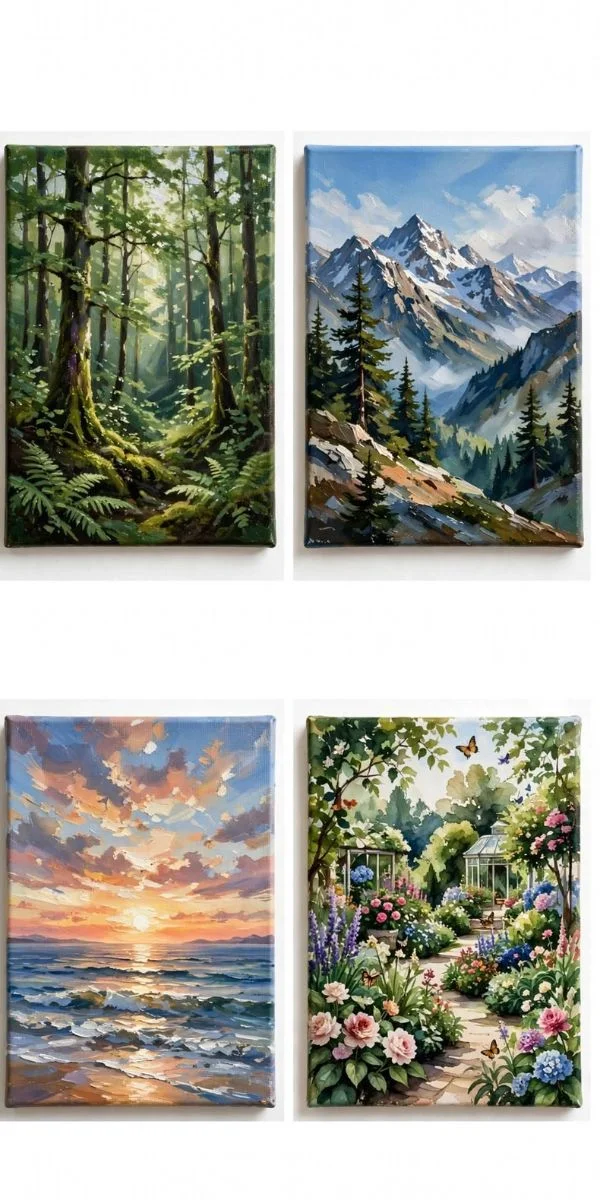
1. Peaceful Forest Scene
Paint a quiet forest using layers of trees, distant hills, and a soft sky. Start with lighter colors in the background and gradually use darker greens and browns toward the foreground.
Adding a narrow path through the trees can create a natural focal point and make the scene feel more inviting.
2. Waterfall Landscape
A waterfall can become the center of a beautiful nature painting. Paint rocky cliffs around a vertical stream of white and blue water.
Add green plants, moss, and trees around the rocks. Use lighter brushstrokes where the water meets the pool to suggest movement.
3. Sunset Beach
Create a warm beach scene with a glowing sunset over the ocean. Blend yellow, orange, pink, and purple across the sky before adding darker water and sand.
A few palm trees or distant birds can complete the composition without requiring much detail.
4. Green Meadow
Paint a wide meadow filled with grass and small flowers. Use short strokes in different shades of green to create texture.
Add a blue sky, fluffy clouds, and distant trees. Small colorful flowers in the foreground can provide contrast.
5. Rainy Day Window
Instead of painting the outdoors directly, show a rainy landscape through a window. Paint water droplets on the glass and a blurred scene of trees, buildings, or umbrellas outside.
This concept is interesting because the background can remain intentionally soft while the droplets receive sharper details.
Floral and Botanical Painting Ideas:
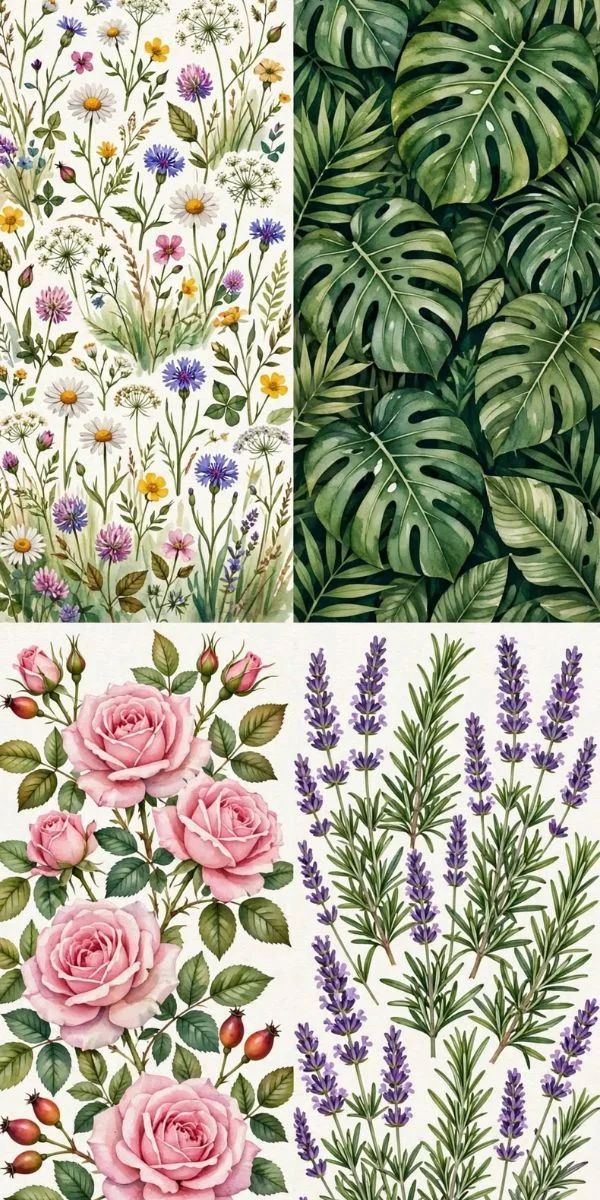
6. Colorful Tulip Garden
Create a garden filled with tulips in pink, yellow, red, orange, and purple. Use simple cup-shaped petals and long green leaves.
Paint larger flowers near the bottom and smaller ones farther away to create a basic sense of depth.
7. Wildflower Bouquet
Paint a loose bouquet containing different flowers rather than trying to reproduce one specific species.
Use dots, short strokes, curved petals, and thin stems. Combining several flower shapes can make the arrangement feel spontaneous and natural.
8. Tropical Leaves
Create a modern botanical composition using large tropical leaves. Monstera-style shapes, long palm leaves, and broad green leaves can overlap across the canvas.
Try adding a few yellow or cream highlights to separate the leaves from one another.
9. Rose in a Vase
Paint a simple vase containing one or several roses. Start with the basic silhouette of the vase before adding flowers and leaves.
For beginners, simplified rose shapes can work just as well as highly detailed petals.
10. Daisy Field
A daisy field is an excellent subject for practicing repeated shapes. Paint a green background with clusters of white flowers scattered across it.
Use yellow centers and vary the size of the daisies so the scene does not appear too uniform.
Creative and Abstract Painting Ideas:
11. Colorful Circles
Fill the painting with circles of different sizes. Overlap some shapes and leave others isolated.
Use a small selection of complementary or coordinating colors. The design can be completely abstract while still having a clear visual rhythm.
12. Abstract Rainbow Strokes
Paint broad curved strokes in rainbow-inspired colors across the surface. Let some strokes overlap while keeping sections of the background visible.
This is an easy project for experimenting with movement, color combinations, and brush pressure.
13. Minimalist Face
Create a simple face using one continuous-looking line. The design might include an eye, nose, lips, and facial outline without realistic shading.
Pair the linework with a plain or softly colored background for a clean contemporary appearance.
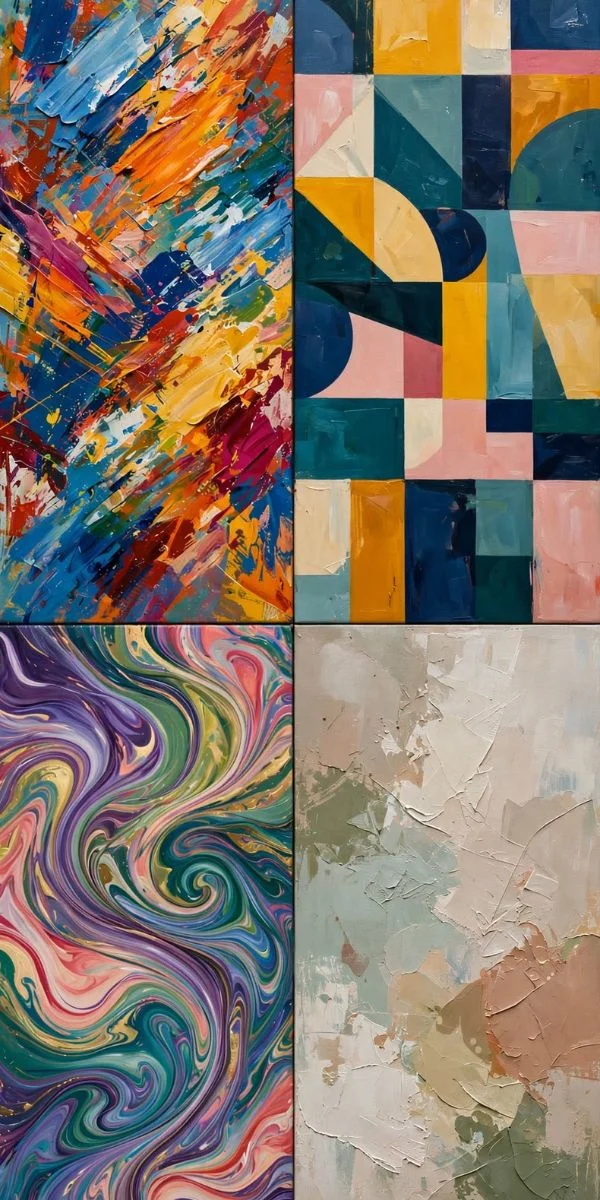
14. Textured Abstract Art
Build an abstract painting with thick brushstrokes, dots, dry-brush marks, and overlapping shapes.
You can combine several techniques on one surface to create areas with different textures.
This idea is especially useful when the goal is to explore paint rather than reproduce a particular subject.
15. Geometric Rainbow
Combine triangles, circles, rectangles, and curved lines with bright colors. Arrange the shapes so that some appear to overlap.
Masking tape can help create cleaner straight edges when working with geometric designs.
Animal and Imaginative Painting Ideas:
16. Colorful Butterfly
Paint a large butterfly with symmetrical wings. Divide each wing into sections and fill them with contrasting colors.
Dots, lines, and small decorative shapes can add detail without making the design overly complicated.
17. Friendly Elephant
Create a simple elephant using large rounded shapes for the body and ears. Add a long trunk and expressive eyes.
Place the elephant in a colorful landscape with grass, flowers, trees, or a sunset.
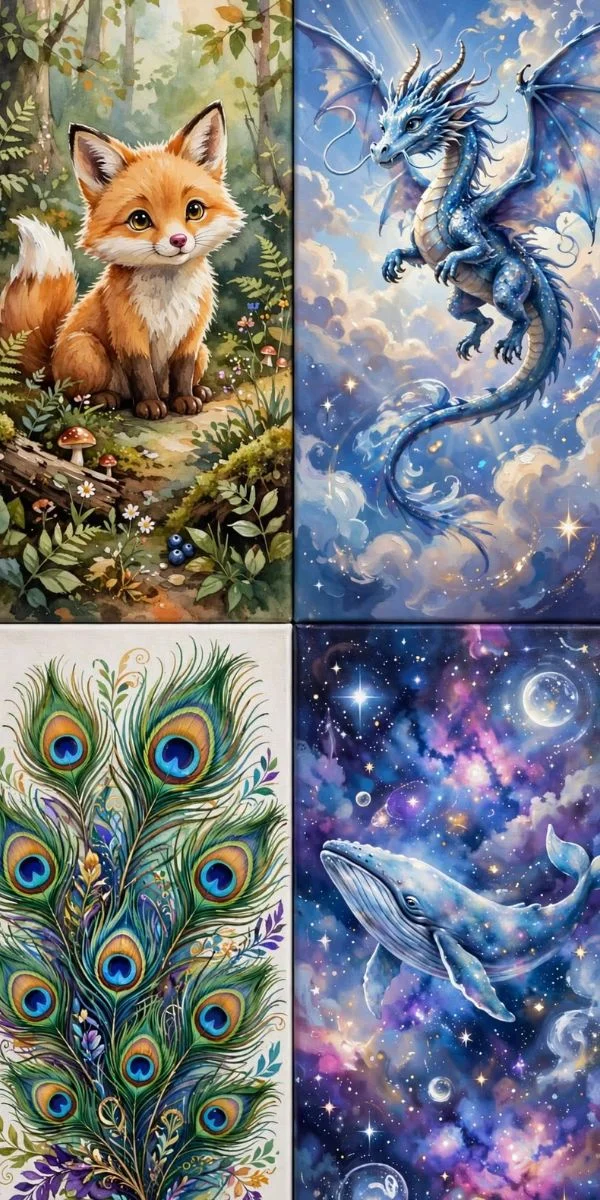
18. Cute Fox in the Forest
Paint a fox sitting among trees and leaves. Use orange and warm brown tones for the animal while keeping the background slightly softer.
A large tail and pointed ears make the fox recognizable even with a simplified painting style.
19. Magical Unicorn
Create a fantasy scene featuring a unicorn surrounded by stars, clouds, flowers, or a rainbow.
The unicorn does not need realistic proportions. Pastel colors and decorative details can create a playful storybook appearance.
20. Underwater Turtle Scene
Paint a sea turtle swimming through an underwater environment. Use blue and turquoise shades for the water and brighter colors for coral and small fish.
Add bubbles around the turtle and vary the size of background objects to give the scene a greater sense of space.
Painting Techniques to Try
Experiment With Blending
Blending two or more colors while they are still workable can create smooth transitions. This technique is particularly useful for skies, sunsets, water, and abstract backgrounds.
Try Dry Brushing
A brush containing only a small amount of paint can create a broken, textured stroke. Dry brushing can work well for tree bark, grass, rocks, clouds, and highlights.
Explore Dot Painting
Dots can be used to form flowers, stars, patterns, textures, or entire abstract compositions. Cotton swabs and the ends of suitable brushes can produce different dot sizes.
Build With Layers
Instead of painting every detail immediately, establish the background and major shapes first. Add smaller elements once the underlying layers are sufficiently dry.
Layering can help separate foreground and background elements and make the composition easier to control.
Interesting Facts About Painting
Painting is both an artistic practice and a way of exploring visual elements such as color, shape, texture, space, and contrast.
Different brushes can produce dramatically different marks. A flat brush can create broad edges, while a fine round brush is useful for small details and narrow lines.
Color perception can change depending on the colors surrounding a particular area. A shade may appear warmer, cooler, brighter, or darker when placed next to different colors.
Many paintings are created in layers rather than completed in a single application. Artists can gradually develop backgrounds, forms, shadows, highlights, and fine details.
Simple Tips for Better Painting
Start With the Main Shapes
Before worrying about tiny details, identify the largest objects in your composition. Blocking these areas in first makes the rest of the painting easier to organize.
Avoid Using Every Color at Once
A limited palette can make artwork feel more cohesive. Choose a few primary colors and add additional shades only when they serve a purpose.
Leave Room for Contrast
Dark areas next to lighter areas can help important objects stand out. Similarly, a colorful subject can become more noticeable against a relatively simple background.
Take Breaks While Painting
Stepping away from the artwork for a few minutes can make it easier to notice proportions, empty spaces, and areas that may need additional detail.
Frequently Asked Questions
What are some easy painting ideas?
Simple sunsets, flowers, butterflies, abstract shapes, landscapes, rainbows, and botanical leaves are excellent choices for beginners. They can be created using basic shapes and straightforward brush techniques.
What should I paint when I have no ideas?
Start with a familiar subject such as a flower, sunset, animal, landscape, or abstract color pattern. You can also combine two simple subjects, such as a butterfly in a flower garden.
What painting ideas are good for beginners?
Beginner-friendly projects include sunset beaches, daisy fields, colorful circles, simple botanical branches, butterflies, and geometric designs.
How do I choose a painting subject?
Consider what type of artwork you enjoy looking at. Nature, animals, flowers, abstract patterns, and fantasy subjects all provide different opportunities for experimenting with color and technique.
How can I make a simple painting look more interesting?
Add variation in size, color, texture, and placement. Overlapping objects, creating contrast, and adding a few carefully chosen details can make a simple composition more engaging.
What colors should a beginner start with?
A small collection of basic colors is enough for many projects. Learning how colors mix and interact is often more useful than having a very large selection.
Is abstract painting easy?
Abstract painting can be approachable because it does not require realistic drawing. You can concentrate on color, movement, shapes, texture, and composition instead.
How can I make my painting look three-dimensional?
Use differences in size, value, and placement. Objects that are smaller, lighter, or less detailed can appear farther away, while larger and more defined elements can appear closer.
What are good painting ideas for kids?
Simple flowers, rainbows, animals, clouds, underwater scenes, hanrints, and colorful abstract patterns can be adapted for children using age-appropriate art materials.
How do I improve my painting skills?
Practice regularly and experiment with different subjects and techniques. Repeating simple exercises such as blending, brush control, color mixing, and basic shapes can gradually build confidence.
Final Thoughts
These 20 painting ideas provide a starting point for many different creative directions. A peaceful forest can become a study in light and depth, a flower bouquet can help develop brush control, while abstract shapes can encourage experimentation without strict rules.
You do not need an elaborate concept to create enjoyable artwork. Choose one idea, gather a few colors, and begin with the largest shapes. As you become more comfortable, add texture, layers, highlights, and your own personal details to make the painting uniquely yours.