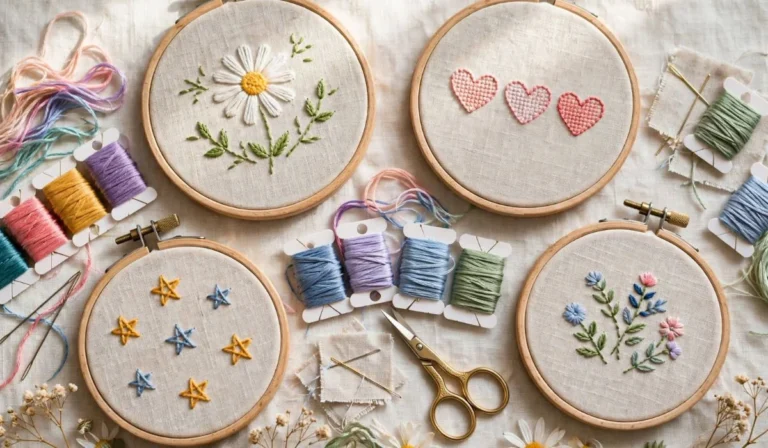
30 Embroidery Flowers | Beautiful Handmade Designs
Flower embroidery is one of the most versatile ways to decorate fabric with colorful threads, textured stitches, and botanical details. These embroidery flowers ideas include classic blooms, wildflowers, tropical designs, tiny blossoms, and creative floral arrangements. Mix stitch styles, thread shades, and flower sizes to create patterns that feel different from one project to another.
Classic Embroidery Flowers
1. Rose Embroidery
Create layered rose petals using satin stitch, long-and-short stitch, or curved thread lines. Combine pink, red, peach, or cream shades for different floral effects.
2. Daisy Embroidery
Use white or colorful petals surrounding a French-knot center. Several small daisies scattered across fabric can create a cheerful meadow pattern.
3. Sunflower Embroidery
Build the flower with bright yellow petals and a textured brown center. Add green leaves and a curved stem to complete the botanical design.
4. Tulip Embroidery
Create simple cup-shaped tulip blooms using red, pink, orange, yellow, or purple thread. Add long green leaves for a clean spring-inspired pattern.
5. Lily Embroidery
Use long curved petals that extend outward from the center. Subtle color changes across the petals can give the flower more dimension.
6. Poppy Embroidery
Create delicate red or orange petals around a dark center. Black French knots or small stitches can add definition to the flower’s center.
7. Carnation Embroidery
Use layered, irregular stitches to create ruffled petals. Different shades of pink or red can make the bloom appear fuller.
8. Peony Embroidery
Build overlapping petals in several layers. Light pink, coral, cream, and burgundy shades can create a soft, richly textured flower.
Small Embroidery Flower Ideas
9. Tiny Wildflower
Create a miniature flower using only a few stitches. Make several tiny blooms in different colors and connect them with thin stems.
10. Lavender Flowers
Use small purple stitches arranged along slender green stems. Multiple lavender sprigs can form a simple botanical arrangement.
11. Forget-Me-Not Flowers
Create tiny blue flowers with small yellow or white centers. Scatter them around leaves for a delicate garden-inspired design.
12. Baby’s Breath
Use small white French knots on thin green branches. This simple pattern works well as a filler around larger embroidered flowers.
13. Clover Flowers
Combine rounded green leaves with small white or pink flower heads. Several clover stems can create a natural meadow effect.
14. Tiny Daffodils
Use yellow and orange thread to create miniature trumpet-shaped flowers. Add narrow green leaves for contrast.
15. Embroidered Pansies
Create colorful petals using purple, yellow, white, or blue thread. Darker lines toward the center can add definition.
Botanical Flower Embroidery
16. Floral Vine
Create a winding stem covered with small flowers and leaves. Let the vine curve naturally across the fabric rather than using a straight line.
17. Flower Garland
Connect multiple flowers with thin stems and leaves to create a horizontal or curved garland. Different flower sizes can make the arrangement more dynamic.
18. Wildflower Bouquet
Combine daisies, tiny buds, lavender, leaves, and other simple flowers into one loose bouquet. Use varied colors to create a natural handmade appearance.
19. Floral Wreath
Arrange flowers and leaves in a circular shape, leaving the center open. The middle can later contain an initial, name, date, or short word.
20. Pressed Flower Style
Create flat-looking flowers with simple outlines and limited stitching. Use muted colors to imitate the appearance of pressed botanical specimens.
21. Flowering Branch
Stitch a curved branch with blossoms appearing at different points along the stem. Cherry blossoms and other small flowers work particularly well for this style.
22. Hanging Flower Pattern
Create flowers growing downward from curved stems. This unusual arrangement can work nicely around the edge of a hoop or fabric panel.
Creative Embroidery Flower Designs
23. Rainbow Flower
Give each petal a different color or use a gradual color transition across the bloom. Keep the center simple so the colorful petals remain the main focus.
24. Monochrome Flowers
Choose one color family and create flowers using several shades of that color. For example, combine pale pink, medium pink, and deep rose.
25. Pastel Flower Garden
Use soft lavender, mint, peach, baby blue, cream, and blush shades to create a gentle floral scene.
26. Embroidered Flower Bouquet
Create several different flower types tied together with embroidered ribbon or stems. Add leaves between the blooms to fill empty areas.
27. Floral Initial
Create a large embroidered letter and decorate its edges with tiny flowers, leaves, vines, and buds. This works well for personalized hoops and gifts.
28. Flower and Butterfly
Combine colorful flowers with one or more butterflies. Place the butterfly slightly above the flowers to create the impression of movement.
29. Flower Border
Create a repeating sequence of flowers and leaves around the edge of fabric. Alternate large and small blooms to avoid a completely uniform appearance.
30. Abstract Embroidery Flowers
Create flowers from unusual shapes, curved lines, dots, and layered stitches rather than copying realistic blooms. Bold color combinations can give this style a contemporary appearance.
Embroidery Stitches for Flowers
Satin Stitch
Satin stitch is useful for filling petals and leaves with smooth blocks of color.
Lazy Daisy Stitch
Lazy daisy stitches are particularly useful for individual petals and small flowers.
French Knots
French knots work well for flower centers, tiny buds, pollen details, and textured floral backgrounds.
Stem Stitch
Use stem stitch for flower stems, curved branches, vines, and delicate outlines.
Long-and-Short Stitch
Long-and-short stitch allows you to blend multiple thread shades and create more dimensional petals.
FAQs
What flowers are easiest to embroider?
Daisies, lavender, simple wildflowers, tulips, tiny blossoms, and basic roses can be good starting points because their shapes can be created with relatively simple stitches.
What stitch is best for flower petals?
There is no single best stitch for every flower. Satin stitch creates smooth petals, lazy daisy stitch works well for simple petals, and long-and-short stitch is useful for shaded or realistic flowers.
How many colors should I use for flower embroidery?
You can create a simple flower with one or two colors or use several shades for more detailed designs. Using different shades of the same color can create depth without making the design too busy.
Can embroidered flowers be used on clothes?
Yes. Small flowers can be stitched onto shirts, jackets, jeans, pockets, hats, tote bags, and other fabric items. Choose stitching and fabric appropriate for the item’s intended use and washing requirements.
How can I make embroidered flowers look more realistic?
Use multiple thread shades, vary stitch direction, add darker centers, layer petals, and incorporate natural-looking leaves and stems. Long-and-short stitching can help create gradual color transitions.