40 Art Sketches | Creative Ideas, Techniques & Drawing Inspiration
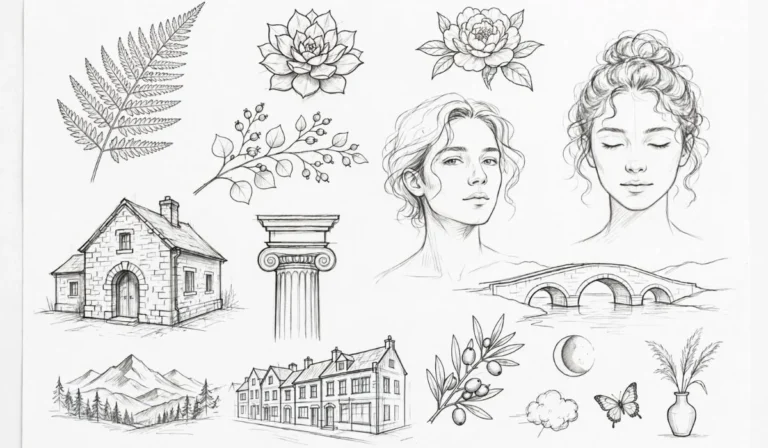
Art sketches are a simple way to explore creativity, practice drawing techniques, and develop original artwork without needing a complicated setup. From quick pencil studies and expressive portraits to nature sketches, fantasy concepts, and detailed still life drawings, sketching offers endless possibilities.
A good sketch does not have to be perfect. You can use light construction lines, shading, cross-hatching, contour drawing, or loose strokes depending on the effect you want. Whether you are a beginner looking for easy art sketches or an experienced artist searching for fresh inspiration, these 40 art sketch ideas cover a wide range of subjects and styles.
Nature & Botanical Art Sketches:

1. Detailed Rose Sketch
A rose is an excellent subject for practicing curved lines, overlapping petals, and shading. Start with the central petals and gradually build outward to create a realistic flower.
2. Mountain Landscape Sketch
Sketch a peaceful mountain scene with layered peaks, clouds, and a distant horizon. Use darker pencil values in the foreground to create depth.
3. Tree With Exposed Roots
Draw a mature tree with twisting branches and visible roots. The irregular shapes make this a useful exercise for practicing organic lines and texture.
4. Sunflower Sketch
Sunflowers offer plenty of detail through their petals and textured centers. Use directional pencil strokes to make the flower appear dimensional.
5. Forest Path Sketch
Create a winding path surrounded by trees and foliage. Gradually reduce the detail of distant objects to create a stronger sense of perspective.
6. Butterfly Sketch
A butterfly is perfect for practicing symmetry and delicate linework. Add subtle patterns to the wings and use gentle shading to make them stand out.
7. Botanical Leaf Study
Choose several different leaves and sketch their shapes, veins, and edges. This simple exercise can improve observation and hand control.
8. Ocean Wave Sketch
Capture a crashing or curling wave using flowing lines. Darker areas beneath the wave can provide contrast and make the water look more dramatic.
9. Mushroom Forest Sketch
Combine mushrooms, moss, leaves, and small plants into a woodland scene. This idea works particularly well for whimsical or fantasy-style sketches.
Read Next: 40 Art Nouveau | Elegant Ideas
10. Moon Over Mountains
Draw a large moon above distant mountains with a dark foreground. This composition is simple enough for beginners but can become highly atmospheric with careful shading.
Portrait & Figure Art Sketches:

11. Female Face Sketch
Practice facial proportions by lightly constructing the eyes, nose, mouth, and jaw before adding darker details. Keep the first lines faint so corrections remain easy.
12. Male Portrait Sketch
Focus on facial structure, hair, and shadows when drawing a male portrait. Stronger angular forms can create an expressive and realistic result.
13. Side Profile Sketch
A side profile is a useful way to study the relationship between the forehead, nose, lips, chin, and neck. Try several profiles with different expressions.
14. Eye Detail Sketch
Create a close-up drawing of an eye, concentrating on the iris, eyelashes, eyelid folds, and reflected light. This is an excellent exercise for practicing fine details.
15. Expressive Face Sketch
Instead of focusing only on realistic proportions, experiment with emotion. Sketch happiness, sadness, surprise, anger, or thoughtful expressions.
16. Hands and Fingers Sketch
Hands can be challenging, making them valuable for drawing practice. Begin with simple geometric forms before adding individual fingers and joints.
17. Hair Texture Sketch
Practice drawing different hairstyles using directional strokes. Try straight, curly, wavy, braided, and messy hair to understand how texture changes.
Read Next: 40 Art Nouveau | Elegant Ideas
18. Sitting Figure Sketch
Draw a person sitting in a relaxed pose. Focus first on the overall gesture and body proportions before working on clothing and details.
19. Fashion Figure Sketch
Create a stylized fashion illustration with an expressive pose and detailed outfit. Flowing fabric, accessories, and dramatic silhouettes can make the drawing more interesting.
20. Couple Silhouette Sketch
Draw two figures standing together as a simple silhouette. This can create a romantic composition while allowing you to focus on posture and body language rather than facial details.
Cute, Creative & Fantasy Sketches:
21. Cute Cat Sketch
A cat is an easy subject for experimenting with expressive eyes, fluffy textures, and playful poses. Try drawing one curled up, sitting, or stretching.
22. Cute Bunny Sketch
Use soft rounded shapes to create an adorable bunny. Add oversized ears and simple facial features for a charming cartoon-style result.
23. Fairy Sketch
Design a small fairy surrounded by flowers, leaves, or magical particles. Flowing clothing and delicate wings can make the sketch feel whimsical.
24. Mermaid Sketch
Create a mermaid beneath an underwater scene filled with bubbles, seaweed, shells, and fish. Pay attention to the movement of hair and fabric underwater.
25. Dragon Sketch
A dragon gives you an opportunity to experiment with scales, horns, wings, claws, and dramatic poses. Start with the basic body structure before adding intricate details.
26. Magical Castle Sketch
Draw a fantasy castle on a mountain or floating island. Towers, bridges, clouds, and tiny windows can make the scene feel like a storybook illustration.
27. Cottagecore House Sketch
Sketch a small cottage surrounded by flowers, trees, a garden path, and climbing vines. Fine details around the windows and doors can add personality.
28. Kawaii Food Sketch
Turn everyday foods such as strawberries, cupcakes, ramen, or coffee into cute characters. Simple shapes and expressive faces make this a fun beginner project.
29. Fantasy Forest Sketch
Imagine a mysterious forest filled with oversized plants, unusual trees, glowing mushrooms, or tiny creatures. Use varied line weights to separate foreground and background elements.
30. Celestial Girl Sketch
Combine a stylized portrait with stars, moons, planets, and clouds. This concept works beautifully with decorative linework and flowing hair.
Still Life, Objects & Detailed Sketches:

31. Coffee Cup Sketch
A coffee cup is a great beginner still-life subject. Practice the elliptical shape of the rim, curved handle, and subtle shadows beneath the cup.
32. Vintage Camera Sketch
Old cameras contain interesting geometric forms, buttons, lenses, and textures. Use careful outlines and tonal shading to emphasize their structure.
33. Books and Glasses Sketch
Stack several books and place a pair of glasses on top. This simple arrangement creates overlapping shapes that are useful for practicing perspective.
34. Candle and Flowers Sketch
Combine a candle with a small floral arrangement. Contrast the smooth candle surface with the irregular shapes of petals and leaves.
35. Old House Sketch
Draw an old cottage or historic house with windows, doors, roof textures, and surrounding plants. Perspective lines will help keep the architecture believable.
36. Bicycle Sketch
A bicycle is an excellent challenge for precision drawing. Focus on the circular wheels, frame geometry, handlebars, and overlapping mechanical parts.
37. Shoes Sketch
Draw a pair of sneakers, boots, or elegant shoes from different angles. This exercise helps improve understanding of perspective, folds, and three-dimensional forms.
38. Still Life With Fruit
Arrange apples, pears, oranges, or grapes on a table and sketch them from observation. Use shadows and overlapping forms to create depth.
39. Detailed Antique Key Sketch
An antique key provides plenty of opportunities for decorative linework. Add small engravings, metallic highlights, and cast shadows for a more intricate drawing.
40. Desk Scene Sketch
Create a complete sketch of a creative desk with notebooks, pencils, a lamp, coffee, books, and small decorative objects. This larger composition allows you to practice perspective and visual storytelling together.
Simple Techniques to Improve Art Sketches
Start With Basic Shapes
Break complicated subjects into circles, cylinders, boxes, and simple curves. Once the proportions look right, gradually replace those construction shapes with refined outlines.
Experiment With Line Weight
Not every line needs the same darkness. Stronger outlines can emphasize foreground objects, while lighter marks can suggest distance and softer surfaces.
Practice Light and Shadow
Before adding heavy details, identify where the light source is coming from. Shade the opposite side of objects and include cast shadows to give your sketches dimension.
Try Cross-Hatching
Cross-hatching uses intersecting lines to create darker areas. Changing the spacing and direction of the lines can produce different levels of texture and tone.
Use Reference Photos
Reference images can help you understand proportions, anatomy, lighting, and perspective. The goal is to study what you see and develop your own drawing skills rather than simply tracing an image.
FAQs About Art Sketches
What should I sketch as a beginner?
Start with uncomplicated subjects such as leaves, flowers, cups, fruit, simple landscapes, eyes, or cute animals. These subjects allow you to practice fundamental shapes without becoming overwhelmed by detail.
What pencil is best for art sketches?
A range of graphite pencils is useful because different hardness levels create different values. A harder pencil works well for light construction lines, while softer graphite is useful for darker shading.
How can I make my sketches look realistic?
Pay attention to proportions, perspective, light direction, edges, and tonal values. Realistic drawings usually depend more on accurate observation and shading than on adding excessive detail.
How long should an art sketch take?
A quick gesture sketch may take only a few minutes, while a detailed portrait or still life can take much longer. The appropriate amount of time depends on the level of detail and purpose of the drawing.
Is sketching important for learning art?
Yes. Regular sketching can strengthen observation, proportion, composition, hand control, and confidence. Many artists use sketches to explore ideas before creating finished artwork.
How do I make pencil sketches more interesting?
Experiment with different textures, line weights, shading techniques, compositions, and subjects. You can also combine realistic details with loose expressive marks to develop a distinctive style.