30 Easy Art And Craft Ideas For Preschoolers | Fun & Creative Projects
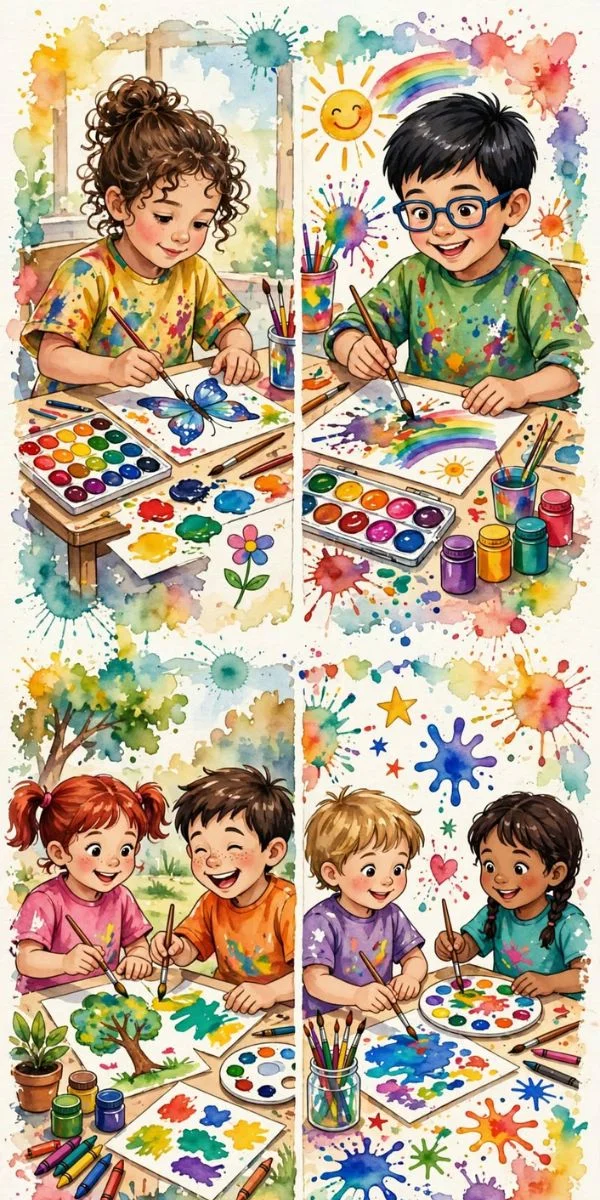
Preschool art is all about exploration rather than perfection. At this age, children learn by touching, mixing, stamping, drawing, tearing, painting, and experimenting with different materials. The best art activities for preschoolers are simple enough to begin independently while leaving plenty of room for imagination.
These 30 art ideas for preschoolers include painting, printing, nature crafts, paper projects, sensory activities, and creative drawing. Many can be adapted for different seasons, classroom themes, or rainy-day activities at home.
Colorful Painting Activities:
1. Rainbow Sponge Painting
Cut a kitchen sponge into small sections and let preschoolers dip each section into a different color of washable paint. They can press the sponge across paper to create a colorful rainbow effect.
Try using several shades of the same color to introduce the idea of light and dark tones. Children can also overlap colors and observe what happens when two shades meet.
2. Bubble Wrap Painting
Place bubble wrap over a table and let children paint directly onto the raised bubbles. Press a sheet of paper onto the painted surface and gently lift it to reveal a dotted texture.
This activity combines painting with sensory exploration. The unusual surface also encourages children to notice patterns and textures.
3. Cotton Ball Cloud Painting
Give children blue construction paper and white paint. Cotton balls can be dipped into the paint and dabbed onto the paper to make fluffy clouds.
For extra creativity, add a sun, birds, rain drops, or a rainbow with crayons after the paint dries.
4. Fork Flower Painting
Instead of using a paintbrush, use a plastic fork to create flower petals. Dip the fork into paint and press it several times around a central dot.
Children can create gardens filled with different flower colors. Green paint or crayons can be used for stems and leaves.
5. Balloon Print Art
Put a small amount of washable paint onto a tray. Let children lightly press an inflated balloon into the paint and then onto paper.
The rounded balloon creates unusual circular prints. Try different colors and overlapping prints to make abstract artwork.
Nature-Inspired Art Ideas:

6. Leaf Printing
Collect clean leaves with interesting shapes and textures. Paint one side of a leaf, place it carefully onto paper, and press gently.
When the leaf is removed, children can see the veins and natural patterns transferred to the paper.
7. Nature Collage
Take a short nature walk and collect safe fallen leaves, small twigs, grass, and flower petals. Arrange the materials on cardstock and glue them into a creative collage.
This project is especially useful for introducing preschoolers to seasonal changes.
8. Flower Petal Art
Use fallen petals to create simple pictures such as butterflies, flowers, suns, or faces. Glue the petals onto thick paper once the design is complete.
Using fallen plant material rather than picking living flowers can also make the activity more environmentally friendly.
9. Pinecone Painting
Give children clean pinecones and washable paint. They can paint the tips, roll the pinecone across paper, or turn it into a colorful decorative object.
The uneven surface provides a different painting experience from ordinary flat paper.
10. Stick Drawing
Collect smooth sticks outdoors and use them as drawing tools in damp sand, soil, or clay. Children can make lines, circles, zigzags, and simple pictures.
This is a wonderful low-cost art activity because the drawing surface can be changed again and again.
Paper and Collage Projects:
11. Torn Paper Rainbow
Provide construction paper in several colors and let preschoolers tear it into small pieces. They can arrange the pieces into a rainbow shape and glue them onto paper.
Tearing paper strengthens small hand movements while giving children control over the size and shape of their materials.
12. Paper Plate Sun
Paint a paper plate yellow and add triangular paper rays around the outside. Children can draw a happy face in the center or decorate it with patterns.
For a more creative version, use orange, yellow, and red paper to make layered rays.
13. Shape Person Collage
Cut circles, rectangles, triangles, and other simple shapes from colored paper. Let children combine them to create people.
One child might make a person with a triangle dress, while another may create a robot-like character. There is no single correct result.
14. Tissue Paper Garden
Give preschoolers small pieces of colorful tissue paper. They can scrunch each piece into a tiny ball and glue the pieces onto paper to form flowers, bushes, or trees.
The activity combines color recognition, texture, and hand coordination.
15. Magazine Picture Collage
Use old magazines and let children select interesting pictures with adult supervision. They can glue the pictures onto a large sheet of paper to create a themed collage.
Possible themes include animals, food, clothing, transportation, or “things I like.”
Fun Process Art for Preschoolers:

16. Marble Roll Painting
Place paper inside a shallow box or tray. Add a small amount of washable paint to a marble, then let children carefully roll it across the paper.
The marble leaves unpredictable lines behind. Children can experiment with different directions and colors.
17. Car Track Painting
Dip the wheels of a small toy car into washable paint and roll it across paper.
Use several toy cars to create different tracks. Children may notice that wider or narrower wheels create different marks.
18. Ice Painting
Freeze colored water in small containers with craft sticks inserted as handles. Once frozen, children can move the colorful ice across thick paper.
The colors gradually melt and create watery streaks. This activity is particularly fun on warm days.
19. String Pull Painting
Dip a piece of string into washable paint, leaving one end clean to hold. Place the painted string onto folded paper, close the paper, and gently pull the string out.
When the paper opens, children will see a mirrored, abstract pattern.
20. Spin Art
Place paper inside a shallow container and add small drops of washable paint. Carefully rotate or spin the container to spread the paint.
Each child can choose different colors and create a unique abstract design.
Animal-Themed Art Ideas:

21. Handprint Butterfly
Paint a child’s hands with washable paint and carefully press them onto paper. Once dry, add a body and antennae to transform the prints into butterflies.
Children can choose bright colors and decorate the wings with dots, lines, or small shapes.
22. Paper Plate Lion
Paint a paper plate yellow or orange. Add a mane using strips of construction paper around the edge.
Draw eyes, a nose, and whiskers in the center. Preschoolers can experiment with different mane colors and expressions.
23. Potato Stamp Fish
Cut a potato into a simple fish-like shape or use a basic rounded stamp shape. Dip it into paint and press it onto paper.
After the paint dries, children can add eyes, fins, bubbles, seaweed, and other underwater details.
24. Caterpillar Finger Painting
Let children make several colorful fingerprints in a row to create a caterpillar body. Add tiny legs, eyes, and antennae with crayons or markers.
This simple project can introduce patterns by encouraging children to alternate two or three colors.
25. Paper Bag Animal
Turn a small paper bag into an animal puppet. Add ears, eyes, a nose, and other features using paper scraps.
Children can choose their own animal rather than following a single example. The finished puppets can also be used for storytelling.
Seasonal and Imaginative Art:

26. Autumn Tree Painting
Draw or lightly outline a tree trunk on paper. Children can use their fingertips or cotton swabs to create colorful autumn leaves.
Try red, orange, yellow, brown, and green to show how leaves can appear in different stages of the season.
27. Snowflake Art
Give children blue or dark-colored paper and white washable paint. They can use cotton swabs, fingers, or small brushes to create snowflake-inspired patterns.
No two snowflakes need to look alike. The goal is to encourage repeated lines and symmetrical-looking designs.
28. Paper Cup Flower Garden
Paint or decorate paper cups and use colored paper to create flowers. Arrange several flowers together to make a pretend garden.
This activity can become a counting exercise by asking children to make five, ten, or more flowers.
29. Dream House Drawing
Give preschoolers a blank sheet of paper and ask them to imagine their dream house. They can draw unusual windows, colorful doors, gardens, pets, trees, or even a slide coming from the roof.
There is no need to correct unrealistic details. Imaginative drawing helps children communicate ideas visually.
30. My Favorite Things Art
Ask children to draw or collage several things they enjoy. Their picture might include a favorite animal, toy, food, person, place, or activity.
This project can become a simple conversation starter because children can explain why each object is important to them.
Helpful Details for Better Preschool Art Activities:
Keep Materials Simple
Preschoolers do not need expensive art supplies to create interesting work. Paper, washable paint, crayons, cardboard, cotton balls, tissue paper, leaves, paper plates, and recycled materials can provide plenty of possibilities.
Choose materials that are age-appropriate and supervise children when using small pieces, scissors, glue, or other supplies that could present a safety concern.
Focus on the Process
A preschool art project does not need to look like the example made by an adult. If a child turns a flower into a colorful abstract picture, that is still successful creative exploration.
Instead of asking, “What is it supposed to be?” try asking, “Tell me about your picture.” This gives children an opportunity to describe their own ideas.
Encourage Color Experiments
Art time is an easy opportunity to introduce basic color concepts. Children can mix blue and yellow, compare light and dark shades, or arrange colors from warm to cool.
Letting them experiment independently can make the learning experience more memorable.
Add Storytelling
Art becomes even more engaging when children can create a story around it. After making an animal picture, for example, ask where the animal lives, what it eats, or what adventure it is having.
The combination of art and storytelling encourages creative thinking and communication.
Interesting Facts About Preschool Art
Art Supports Early Development
Drawing, painting, tearing paper, and manipulating small art materials involve hand and finger movements. These activities can help children practice fine-motor control needed for everyday tasks.
Process Art Encourages Experimentation
Process art emphasizes what children experience while creating rather than producing an identical finished product. It gives preschoolers more freedom to make choices and test ideas.
Children Notice Patterns Naturally
Preschoolers often repeat dots, lines, circles, colors, and shapes without being specifically asked to do so. Repetition in art can become an early introduction to patterns and sequencing.
Art Can Build Vocabulary
Painting and crafting provide natural opportunities to introduce words such as smooth, rough, bright, pale, round, curved, thick, thin, large, and tiny.
How to Make These Art Ideas More Engaging
Create an Art Invitation
Instead of giving children a strict set of instructions, place a few materials on a table and provide a simple starting idea. For example, put paper, leaves, glue, and crayons together and invite children to make a nature picture.
This approach allows them to decide what the final artwork will become.
Display Their Artwork
Hang finished pieces at a child’s eye level or create a small rotating art wall. Seeing their work displayed can make children feel that their creative efforts are valued.
You can also date the artwork to create a simple record of their changing drawing and painting abilities.
Change One Element
A familiar activity can feel completely new when one material changes. Try sponge painting one week, cotton-swab painting another week, and leaf printing later.
Small changes keep the creative process interesting without requiring an entirely new project every time.
FAQs About Art Ideas for Preschoolers
What are easy art ideas for preschoolers?
Some of the easiest options include sponge painting, finger painting, leaf printing, torn-paper collages, cotton-ball painting, paper-plate crafts, and simple shape collages.
What art supplies should preschoolers use?
Common supplies include washable paint, crayons, child-safe markers, construction paper, cardstock, glue, cotton balls, paper plates, tissue paper, and recycled cardboard. Always select materials appropriate for the child’s age.
How can I make preschool art less messy?
Use washable supplies, cover the work surface, provide smocks or old clothing, and keep the number of materials manageable. A large tray can also help contain smaller projects.
Should preschoolers copy an art example?
An example can be useful as inspiration, but children do not need to reproduce it exactly. Allowing them to make their own choices encourages imagination and experimentation.
What art activity helps preschoolers learn colors?
Color mixing, rainbow painting, sponge printing, tissue-paper collages, and flower painting are excellent choices. Ask children what happens when two colors are combined to make the activity more interactive.
Can nature be used for preschool art?
Yes. Fallen leaves, twigs, petals, pinecones, and other safe natural materials can be used for printing, collages, painting, and texture activities. Check materials carefully before giving them to young children.
How long should a preschool art activity last?
Many preschool art activities work well in short sessions of around 15 to 30 minutes. The ideal length depends on the child’s interest, the activity, and the number of steps involved.
What is the most important part of preschool art?
The most important part is the creative experience. Children should have opportunities to make choices, explore materials, experiment with colors and textures, and express their own ideas rather than worrying about producing perfect artwork.