26 Embroidery Patterns | Beginners and Creative Stitching
Embroidery is a timeless textile art that can turn an ordinary piece of fabric into something personal, decorative, and eye-catching. From tiny floral motifs to detailed landscapes, embroidery patterns give beginners a structured way to practice stitches while allowing experienced makers to develop more elaborate designs.
The best part about embroidery is its versatility. You can stitch on clothing, tote bags, pillow covers, hoops, table linens, denim, canvas, and handmade gifts. Whether you prefer delicate flowers, botanical artwork, animals, geometric shapes, or modern minimalist designs, these 26 embroidery patterns offer inspiration for different skill levels.
How to Choose the Right Embroidery Pattern
Before picking a design, consider the fabric, thread, hoop size, available time, and your stitching experience. A simple pattern with a few outlines is usually easier for beginners, while dense patterns with multiple colors and stitch types require more patience.
Quick Selection Guide
- Beginner: flowers, hearts, stars, leaves, simple fruit
- Intermediate: birds, butterflies, bouquets, mushrooms, landscapes
- Advanced: portraits, detailed botanical designs, animals, mandalas
- Quick projects: initials, tiny flowers, moons, stars
- Decorative projects: landscapes, wreaths, floral bouquets
- Gift projects: names, initials, hearts, birth flowers
1. Floral Embroidery Pattern
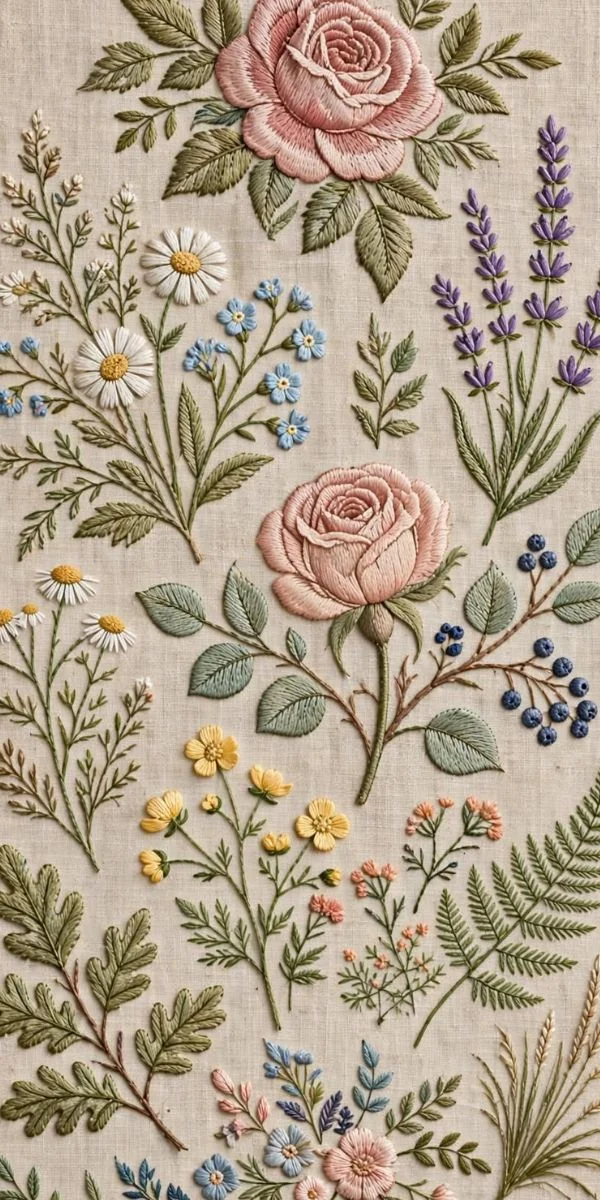
Floral embroidery is one of the most popular choices because flowers can be adapted to almost any stitching style. You can create a single delicate flower or build an entire garden across the fabric.
Stitching Ideas
Use stem stitch for curved stems, satin stitch for petals, and French knots for flower centers. Combining different stitches gives even simple flowers more dimension.
Good for: hoops, clothing, pillowcases, tote bags, and gifts.
Fact: Many traditional embroidery styles around the world use flowers and plants as recurring decorative motifs because botanical forms translate naturally into repeated textile patterns.
2. Botanical Leaf Pattern
Leaf designs are perfect when you want something elegant without creating a complicated composition. A collection of leaves can form a wreath, border, branch, or standalone motif.
Make the Leaves More Interesting
Try different stitch directions to imitate veins and natural growth. Green is an obvious choice, but autumn shades, monochrome thread, or unexpected colors can create a modern appearance.
Beginner tip: Start with simple outlines before attempting filled leaves.
3. Embroidered Butterfly
Butterflies make beautiful embroidery motifs because their wings provide space for symmetrical patterns and contrasting thread colors.
Add Detail to the Wings
Use satin stitches for larger sections and backstitch for the body and wing outlines. French knots can add tiny decorative accents.
You can create:
- Monarch-inspired butterflies
- Pastel butterflies
- Floral butterflies
- Minimalist outlines
- Fantasy-colored wings
4. Embroidery Heart Pattern
A heart is one of the easiest motifs to personalize. It can be embroidered as a simple outline or filled with flowers, initials, leaves, or geometric details.
Creative Uses
Heart embroidery works particularly well on:
- Handkerchiefs
- Baby clothing
- Tote bags
- Anniversary gifts
- Greeting cards
- Hoop art
Use red for a traditional appearance or experiment with neutral and pastel shades for a softer design.
5. Embroidered Mushroom Pattern
Mushrooms are excellent subjects for whimsical and nature-inspired textile artwork. Their rounded caps and decorative stems are easy to simplify into embroidery shapes.
Create a Woodland Theme
Combine mushrooms with:
- Tiny flowers
- Leaves
- Ferns
- Acorns
- Small insects
This pattern is especially attractive for cottagecore and forest-inspired embroidery.
6. Floral Wreath Embroidery
A floral wreath turns several small motifs into one balanced composition. Start with a circular guide and place leaves and flowers around it.
Build the Composition Gradually
Use larger flowers as focal points and smaller leaves to fill empty spaces. Keeping some open fabric visible prevents the design from becoming visually crowded.
Best for: embroidery hoops, nursery décor, seasonal decorations, and handmade gifts.
7. Embroidered Bird Pattern
Birds are excellent subjects for intermediate embroidery because their bodies can be simplified while feathers provide opportunities for detailed stitching.
Choose a Recognizable Silhouette
You can stitch a small songbird, hummingbird, robin, owl, or imaginary bird.
Layer short stitches in different directions to suggest feathers rather than filling the entire body with one flat color.
Fact: Bird feathers grow in specialized follicles and have different structural functions, which is why using varied stitch directions can visually imitate the layered appearance of plumage.
8. Embroidered Sun
A sun design can be cheerful, celestial, minimalist, or highly decorative. A simple circular center surrounded by rays creates an immediately recognizable motif.
Try Different Styles
- Smiling sun
- Geometric sun
- Floral sun
- Celestial sun
- Minimalist line-art sun
Gold, yellow, orange, and warm neutrals work naturally, but unusual colors can give the pattern a contemporary look.
9. Moon and Stars Embroidery
A moon surrounded by stars is an excellent choice for nighttime-themed artwork. Crescent moons are particularly easy to incorporate into small embroidery hoops.
Add a Celestial Background
Combine the moon with:
- Stars
- Clouds
- Tiny flowers
- Constellation-inspired lines
- Sparkles
Dark navy, charcoal, cream, silver, and muted gold can create an elegant nighttime palette.
10. Embroidered Fruit Pattern
Fruit embroidery brings color and playfulness to fabric. Apples, strawberries, cherries, lemons, oranges, and pears are especially recognizable motifs.
Create a Kitchen-Inspired Collection
Instead of one large fruit, stitch several smaller pieces together. A repeating pattern of cherries or lemons can work beautifully on kitchen textiles and tote bags.
Use satin stitch for smooth fruit surfaces and tiny highlights to create visual dimension.
11. Embroidered Bee
A tiny bee can become a charming standalone design or part of a larger garden composition.
Pair It With Botanical Motifs
Surround your bee with:
- Lavender
- Wildflowers
- Leaves
- Honeycomb shapes
Black and yellow thread creates an immediately recognizable appearance, while pastel colors offer a softer decorative style.
Fact: Bees play an important role in pollination, transferring pollen between flowers as they forage.
12. Embroidered Lavender
Lavender is particularly suitable for delicate embroidery because its narrow stems and clustered flowers translate well into simple stitches.
Create a Minimal Botanical Design
Use a long stem stitch for the stalk and small repeated stitches for the flowers. Several lavender stems tied together with an embroidered ribbon can create an elegant gift design.
13. Embroidery Name Pattern
Personalized embroidery is one of the easiest ways to transform a basic design into a meaningful gift.
Ideas for Personalization
Embroider:
- First names
- Initials
- Family names
- Short words
- Important dates
- Nicknames
Pair lettering with flowers, stars, leaves, or tiny hearts.
For beginners, practice lettering on scrap fabric before working on the final project because consistent spacing is important.
14. Embroidered Initials
Initial embroidery is even simpler than a full name and works beautifully on clothing and accessories.
Make the Letter Decorative
Instead of plain lettering, surround the initial with:
- Small flowers
- Vines
- Leaves
- Stars
- Tiny dots
A single embroidered initial can create a subtle monogram without overwhelming the fabric.
15. Embroidered Cottage Scene
A tiny cottage surrounded by trees, flowers, and hills can become a miniature landscape in a hoop.
Build the Scene in Layers
Begin with the largest background shapes before adding small foreground details. This prevents the design from becoming overcrowded.
A cottage scene is particularly suitable for:
- Nature lovers
- Handmade wall art
- Rustic décor
- Cottagecore projects
- Gift embroidery
16. Mountain Landscape Embroidery
Mountain embroidery combines simple silhouettes with atmospheric details. It can be as minimal as two mountain peaks or as detailed as an entire landscape.
Add Depth With Stitch Direction
Use darker thread for foreground mountains and lighter shades for distant shapes. Small trees, clouds, a sun, or a lake can complete the composition.
This design works particularly well in larger embroidery hoops.
17. Embroidered Ocean Waves
Ocean wave embroidery is ideal for coastal décor and minimalist artwork. Curved lines can suggest moving water without requiring complicated filled stitches.
Create a Layered Wave Effect
Use several shades of blue or experiment with monochrome stitching. Add a small sun, boat, shell, or seabird if you want a storytelling element.
18. Embroidered Seashell Pattern
Seashells are easy to stylize because their natural shapes already contain curved lines and repeated ridges.
Make a Coastal Collection
Stitch several shells together using different shapes and thread shades. Add small pearls, bubbles, coral, or seaweed motifs to create an underwater-inspired composition.
19. Embroidered Cat Pattern
Cat embroidery can range from a simple silhouette to a highly detailed portrait. For a beginner-friendly version, concentrate on the ears, eyes, whiskers, and basic outline.
Add Personality
Different poses can communicate different moods:
- Sitting cat
- Sleeping cat
- Stretching cat
- Playful kitten
- Curled-up cat
Long, fine stitches can work well for whiskers, while shorter stitches can suggest fur.
20. Embroidered Dog Pattern
A dog portrait can make an especially meaningful personalized project. You can create a realistic breed-specific design or a simple cartoon-like silhouette.
Focus on the Most Recognizable Features
If you are stitching a particular dog, pay attention to:
- Ear shape
- Face proportions
- Fur pattern
- Collar
- Eye placement
- Tail position
For a beginner project, an outline portrait is considerably easier than attempting realistic fur.
21. Embroidered Rose
Roses provide endless opportunities for stitch experimentation. Their layered petals can be represented using satin stitches, woven roses, or combinations of several techniques.
Create a Dramatic Flower
Use one large rose as the focal point and surround it with smaller leaves. Deep red, pink, cream, burgundy, and even blue can create dramatically different moods.
A single embroidered rose can also work beautifully on denim.
22. Embroidered Daisy
Daisies are simpler than roses and therefore excellent for beginners. Their basic structure consists of a center surrounded by petals.
Make a Daisy Field
Instead of one flower, repeat different sizes across the fabric. Add small stems and leaves to create a meadow-like effect.
French knots are particularly useful for creating textured flower centers.
23. Geometric Embroidery Pattern
Not every embroidery design needs to represent something from nature. Geometric embroidery uses lines, circles, triangles, grids, diamonds, and repeating shapes.
Explore Modern Designs
Try:
- Concentric circles
- Abstract grids
- Repeating diamonds
- Symmetrical line art
- Minimalist shapes
Geometric designs are particularly effective when you use only one or two thread colors.
24. Mandala Embroidery Pattern
Mandalas use radial symmetry to create balanced circular designs. Embroidering a mandala can be more time-consuming because repeated details require careful placement.
Build From the Center
Begin with a central shape and gradually expand outward. Keep each section aligned so that the overall pattern remains symmetrical.
Use repeated stitches and alternating textures to distinguish each ring.
Fact: The word “mandala” comes from Sanskrit and broadly refers to a circular representation; mandala traditions have important religious and cultural meanings in several South Asian traditions.
25. Embroidered Sunflower
Sunflowers make excellent statement pieces because their large flower heads provide a strong central focus.
Combine Texture and Color
Use layered yellow petals around a darker center. Add a green stem and broad leaves for a recognizable botanical composition.
A sunflower can be embroidered individually or combined with smaller flowers to create a full bouquet.
26. Embroidered Garden Scene
For the most ambitious project on this list, combine multiple motifs into one garden scene. Instead of following a single isolated pattern, create an entire little world on the fabric.
Elements You Can Include
- Flowers
- Butterflies
- Bees
- Birds
- Leaves
- Mushrooms
- Garden paths
- Small trees
- A cottage
- Clouds
- Sunlight
This approach lets you combine different embroidery techniques and creates a highly personalized finished piece.
Essential Embroidery Stitches to Learn
You do not need dozens of stitches to create beautiful embroidery. Learning a small group of versatile stitches can cover a surprising number of patterns.
Backstitch
Backstitch is useful for outlines, lettering, stems, borders, and fine details. It produces a strong continuous line.
Satin Stitch
Satin stitch creates smooth filled areas and works especially well for petals, leaves, lettering, and geometric shapes.
French Knot
French knots create small raised dots. They are useful for flower centers, eyes, stars, decorative accents, and textured surfaces.
Stem Stitch
Stem stitch is particularly useful for curved stems, vines, branches, and flowing outlines.
Chain Stitch
Chain stitch creates a linked line that can function as an outline or decorative filled area.
Choosing Fabric for Embroidery
Fabric choice affects how easily the needle passes through the material and how stable the finished design becomes.
Beginner-Friendly Options
Cotton and linen-blend fabrics are popular choices for hand embroidery because they provide a relatively stable surface.
For heavier projects, choose a fabric with enough structure to support the stitches without excessive stretching.
Choosing Embroidery Thread
Six-strand cotton embroidery floss is widely used for hand embroidery. The strands can often be separated and recombined to change the thickness of the stitched line.
Match Thread Weight to the Design
Use fewer strands for:
- Fine outlines
- Tiny details
- Small lettering
Use more strands for:
- Large filled shapes
- Bold flowers
- Strong outlines
- Decorative statement pieces
How to Transfer an Embroidery Pattern
A design must be transferred to the fabric before stitching unless you are working freehand.
Common Transfer Methods
You can use:
- Transfer pens or pencils
- Tracing methods
- Water-soluble stabilizers
- Carbon-style transfer paper
- Printed temporary pattern sheets
Always test a transfer method on scrap fabric first, particularly when working with valuable clothing or delicate textiles.
How to Keep Embroidery Neat
Good embroidery is not only about choosing attractive patterns. Consistent tension and careful stitch placement make a major difference.
Keep Your Thread Tension Even
Pulling the thread too tightly can distort the fabric. Leaving stitches too loose can create messy loops.
Aim for enough tension to lay the stitch neatly without puckering the fabric.
Plan Color Changes
Before stitching a multicolored design, decide which areas should visually dominate. Too many equally strong colors can make a small embroidery piece look crowded.
Creative Places to Use Embroidery Patterns
Once you have finished a design, there are many ways to use it beyond an embroidery hoop.
Clothing and Accessories
Try embroidery on:
- Denim jackets
- Jeans
- Shirts
- Hats
- Tote bags
- Pouches
Home Décor
Embroidered designs can become:
- Wall art
- Cushion covers
- Table runners
- Decorative fabric panels
- Seasonal ornaments
Handmade Gifts
Personalized embroidery is particularly suitable for birthdays, weddings, anniversaries, new-home gifts, and other memorable occasions.
Tips for Beginners Starting Their First Pattern
Choose a small project rather than starting with an extremely detailed design. A simple flower, heart, leaf, or initial can teach you the basic rhythm of stitching without becoming overwhelming.
A Simple First-Project Checklist
- Select stable fabric.
- Use an appropriately sized hoop.
- Transfer a simple design.
- Separate thread strands if necessary.
- Practice the stitches on scrap fabric.
- Keep thread tension consistent.
- Secure the fabric firmly in the hoop.
- Work slowly around curves.
- Finish and clean the fabric carefully.
Frequently Asked Questions
What is the easiest embroidery pattern for beginners?
Simple flowers, leaves, hearts, stars, initials, and basic geometric shapes are excellent starting points because they use straightforward outlines and a limited number of stitches.
What embroidery stitch should a beginner learn first?
Backstitch is a useful first stitch because it can create outlines, lettering, stems, borders, and many other basic elements.
What fabric is best for hand embroidery?
Cotton and linen-blend fabrics are popular choices for beginners because they provide a stable surface and are generally easy to stitch through.
How many strands of embroidery floss should I use?
It depends on the desired appearance. Fewer strands create finer lines, while more strands create thicker and bolder stitches.
Can I embroider without a hoop?
Yes, although a hoop can help maintain fabric tension and make stitching more consistent, especially for beginners.
How do I prevent embroidery fabric from puckering?
Avoid pulling stitches excessively tight and keep the fabric evenly tensioned. An appropriately sized hoop can also help stabilize the work.
Is embroidery difficult to learn?
Basic embroidery is relatively approachable. Learning a few fundamental stitches can allow beginners to complete many attractive designs, while advanced techniques require additional practice.
Can embroidery patterns be used on clothes?
Yes. Embroidery can be applied to many garments and accessories, including denim, cotton shirts, jackets, hats, and bags. Choose a suitable stabilizing method for the specific fabric.
How long does an embroidery project take?
A tiny motif may take less than an hour, while a detailed landscape, portrait, or large botanical composition can require many hours depending on complexity.
What is the best embroidery pattern for a gift?
Personalized names, initials, flowers, hearts, pets, birth flowers, and meaningful landscapes are popular choices because they can be adapted to the recipient.