30 Paper Mache | Creative Craft Ideas, Tips & Easy Projects
Paper mache is a versatile craft technique that turns simple materials such as paper and adhesive into lightweight, moldable objects. It can be used for sculptures, masks, decorations, ornaments, bowls, animals, seasonal crafts, and imaginative art projects.
The basic process usually involves layering strips of paper over a form or combining shredded paper with a paste to create a workable pulp. Once completely dry, paper mache becomes firm enough to paint, decorate, and display.
There are several ways to make paper mache, and different methods are better suited to different projects. The 30 ideas below are divided into four categories to make it easier to find a project that matches your interests.
Paper Mache Animals and Nature
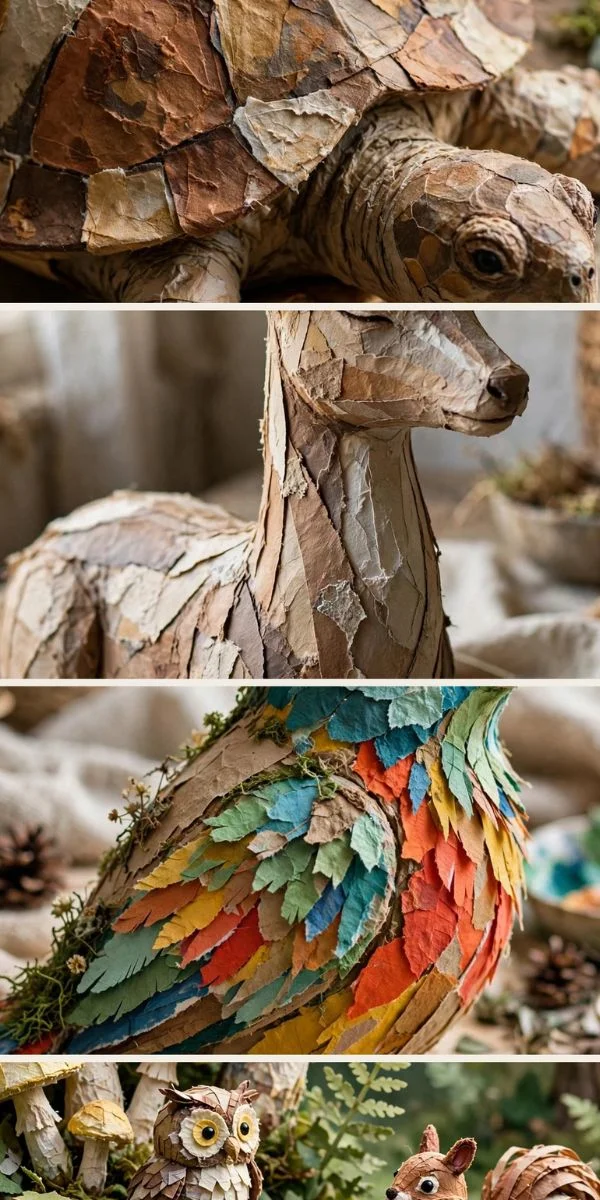
Animal projects are among the most recognizable paper mache crafts. Their irregular shapes allow crafters to experiment with building volume, texture, and details.
1. Paper Mache Elephant
A paper mache elephant can become a playful sculpture or children’s room decoration. Build the body around a lightweight base, then add the trunk, ears, and legs separately.
Once dry, the elephant can be painted gray, decorated with patterns, or transformed into a colorful fantasy animal.
2. Paper Mache Turtle
A turtle is a useful beginner-friendly project because its rounded shell can be created over a balloon or simple curved form.
After the shell dries, add a head, legs, and tail. Painted shell patterns can make each finished turtle look different.
3. Paper Mache Bird
Paper mache birds can range from simple decorative figures to detailed sculptures. A lightweight core can establish the body shape while paper layers create a smoother exterior.
Use paint to add feathers, eyes, wings, and colorful markings after the structure has completely dried.
4. Paper Mache Fish
Fish sculptures are excellent for experimenting with curved bodies and decorative surfaces. Cardboard can help create the basic silhouette before paper strips are applied.
Bright acrylic paints can be used to create scales, fins, eyes, and underwater-inspired patterns.
5. Paper Mache Butterfly
A paper mache butterfly can be made as a freestanding decoration or wall artwork. Thin cardboard or paper can form the wings while the central body provides structural support.
Metallic, pastel, or highly contrasting colors can turn a simple butterfly into an eye-catching craft.
6. Paper Mache Dinosaur
Dinosaur sculptures are popular for children’s crafts and imaginative displays. Cardboard, crumpled paper, and tape can establish the skeleton-like shape before the paper layers are added.
Green is a classic choice, but fantasy colors can make the finished dinosaur more playful.
7. Paper Mache Mushroom
A mushroom sculpture combines a rounded cap with a narrow stem, making it relatively simple to construct from basic forms.
Try creating several mushrooms in different sizes for a woodland-inspired display. Red-and-white spots can give the classic mushroom appearance.
8. Paper Mache Cactus
A paper mache cactus is a fun alternative to a real indoor plant. Build the central shape around cardboard and crumpled paper before covering it with paper layers.
Once dry, paint it green and add small painted spines. A decorated paper mache pot can complete the display.
Paper Mache Masks and Sculptures:
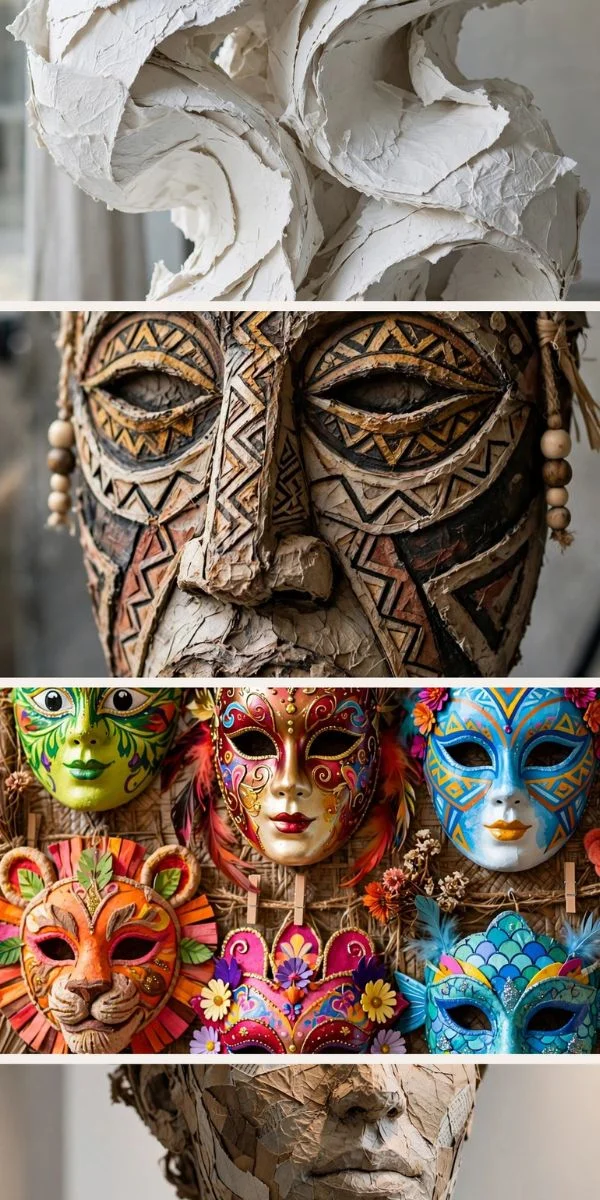
Masks and sculptural projects allow paper mache to move beyond simple decorations. They can be shaped around molds, forms, balloons, or other temporary supports.
9. Paper Mache Animal Mask
Animal masks can represent lions, cats, foxes, rabbits, or other creatures. A cardboard foundation can provide the basic face shape.
Paper layers add volume around the nose, cheeks, ears, and forehead. After drying, paint and decorative materials can create the final character.
10. Paper Mache Cat Mask
A cat mask can be designed with pointed ears, a small muzzle, and painted whiskers. The facial structure can remain simple for a beginner project.
Black, white, orange, gray, or patterned finishes can produce different cat characters.
11. Paper Mache Fox Mask
Fox masks work particularly well with orange, white, and black paint. The pointed ears and elongated muzzle help establish the recognizable silhouette.
For a more artistic result, geometric patterns can be added over the basic fox design.
12. Paper Mache Face Sculpture
A paper mache face can be realistic, abstract, or completely imaginary. Start with a simple base and gradually build facial features using additional paper and adhesive.
This project is useful for exploring proportion, texture, shadows, and three-dimensional form.
13. Paper Mache Bust
A bust represents the head, neck, and upper portion of a figure. Paper mache makes it possible to create a relatively lightweight decorative sculpture.
Cardboard and crumpled paper can provide the internal structure, while layered paper creates the outer surface.
14. Paper Mache Puppet Head
Paper mache puppet heads can be created around balloons or lightweight forms. Once the exterior is firm and dry, facial features can be painted or attached.
Large eyes, exaggerated noses, and bright colors are especially effective for theatrical or children’s puppet projects.
15. Paper Mache Monster
Monster sculptures are perfect for creative freedom because there is no fixed appearance. Combine unusual eyes, horns, teeth, ears, and body shapes.
A textured paint finish can make the surface appear rough, scaly, or fantastical.
Paper Mache Home Decor:
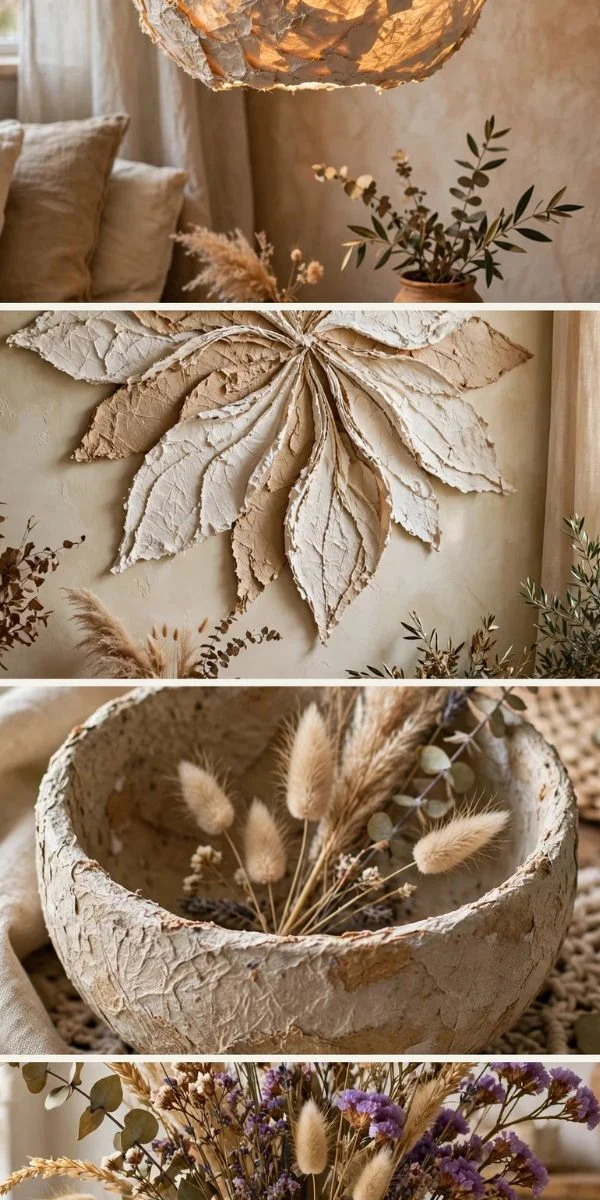
Paper mache is useful for lightweight decorative objects that can be customized to match different rooms and color schemes.
16. Paper Mache Bowl
A bowl can be formed over an existing bowl covered with a protective layer. Several paper layers help create a sturdy structure.
After drying, remove the support bowl and decorate the exterior with paint, paper patterns, or other craft materials. For practical use, remember that traditional paper mache is not naturally waterproof.
17. Paper Mache Vase
A paper mache vase can be made as decorative home decor using a bottle or shaped container as a temporary form.
Because ordinary paper mache is vulnerable to moisture, a finished vase is generally better suited to artificial flowers or dry arrangements unless an appropriate waterproofing system has been specifically applied and tested.
18. Paper Mache Wall Art
Flat or dimensional paper mache can become unique wall art. Create flowers, abstract shapes, faces, landscapes, or geometric patterns.
Lightweight construction makes paper mache suitable for many decorative wall pieces when securely mounted.
19. Paper Mache Letters
Large paper mache letters can spell names, words, initials, or short messages. Cardboard is often used to create the basic letter shape before covering it.
Paint, fabric, decorative paper, or small embellishments can personalize the finished letters.
20. Paper Mache Hanging Ornament
Small ornaments can be created using balloons, cardboard shapes, or molded paper pulp. Add a loop before the piece becomes completely dry if the ornament needs to hang.
These decorations can be customized for birthdays, weddings, holidays, or everyday home decor.
21. Paper Mache Planter Cover
A paper mache planter cover can add color and texture around an existing plant container. It should not be treated as a waterproof plant pot unless it has been specifically engineered and sealed for moisture exposure.
Using a separate waterproof pot inside the decorative cover is a safer approach for plants.
22. Paper Mache Decorative Tray
A shallow tray can be formed over a mold using multiple layers of paper. Once dry, it can be painted in neutral colors, bold patterns, or metallic finishes.
For everyday use, avoid exposing untreated paper mache to water.
4. Paper Mache Seasonal and Creative Crafts
Seasonal projects are a great way to use paper mache because the technique can create oversized decorations without requiring heavy materials.
23. Paper Mache Pumpkin
A pumpkin can be shaped around a balloon or crumpled-paper form. Add raised sections to create the characteristic pumpkin ridges.
Orange paint gives the traditional appearance, while white, black, gold, or pastel colors can create modern variations.
24. Paper Mache Halloween Skull
A skull can be built using lightweight paper and cardboard forms. The eye sockets, nose cavity, and jaw create the most recognizable details.
Paint can produce anything from a realistic bone appearance to a colorful Halloween decoration.
25. Paper Mache Ghost
A paper mache ghost can be formed over a balloon or rounded temporary support. The lower portion can be shaped into flowing folds.
White paint and dark eyes create the traditional look, while unusual facial expressions can make each ghost unique.
26. Paper Mache Christmas Ornament
Christmas ornaments can be made from small paper mache shapes such as stars, hearts, snowflakes, bells, and miniature figures.
Allow the ornament to dry completely before painting. A protective topcoat can help protect the surface from ordinary handling, although it does not automatically make paper mache waterproof.
27. Paper Mache Snowman
A snowman can be constructed from several lightweight rounded forms. Stack the sections and reinforce the joins before applying additional paper layers.
Add a painted face, scarf, buttons, and hat for a classic winter decoration.
28. Paper Mache Easter Egg
Large decorative Easter eggs can be created over balloons or egg-shaped forms. Once dry, the surface can be painted with stripes, flowers, dots, or pastel patterns.
Smaller versions can work as tabletop decorations or seasonal ornaments.
29. Paper Mache Pinata
A paper mache pinata is traditionally made by covering a temporary form with paper strips and paste, leaving an opening for adding lightweight treats or small prizes.
The exterior can be decorated with colored paper, fringe, or paint. The structure must be strong enough to hold its contents but designed appropriately for the intended activity.
30. Paper Mache Fairy House
A miniature fairy house combines several paper mache techniques in one project. Cardboard can create the foundation while paper layers form curved roofs, walls, windows, and decorative details.
Paint, moss-inspired textures, tiny doors, and flower details can transform the finished piece into a whimsical display.
Basic Materials for Paper Mache
Most paper mache projects require only a few inexpensive materials. Common supplies include newspaper or other paper, adhesive or paste, water, scissors, cardboard, masking tape, a base form, and acrylic paint.
The exact materials depend on the technique. Traditional strip paper mache uses paper strips dipped in paste, while pulp-based methods use shredded paper mixed into a moldable material.
How Paper Mache Works
Paper mache becomes strong because overlapping paper fibers are held together by an adhesive or binder. As the water in the paste evaporates, the structure becomes progressively harder.
Multiple thin layers are usually preferable to one extremely thick layer because they can create a more even structure and dry more consistently.
How Long Does Paper Mache Take to Dry?
Drying time varies with the project’s thickness, humidity, ventilation, and materials. Thin projects may dry relatively quickly, while thick sculptures can require considerably longer.
The outside may feel dry while moisture remains inside, so larger projects should be allowed to dry thoroughly before painting.
Tips for Making Strong Paper Mache
Use manageable paper strips rather than extremely large pieces. Smooth each strip onto the previous layer so there are fewer loose edges and air pockets.
Build up several layers gradually instead of making the object extremely thick in one session. Allowing some drying between stages can also help large projects retain their shape.
Common Paper Mache Problems
Cracking can occur when the structure dries unevenly or when the paper layers are too thick. Warping may happen when one side dries much faster than another.
Mold can develop when a paper mache project remains damp for too long. Good airflow and thorough drying are important, particularly in humid environments.
Painting Paper Mache
Acrylic paint is a popular choice because it dries relatively quickly and is available in many colors. A primer can help create a more uniform surface before painting.
For detailed projects, paint can be combined with dry brushing, outlining, dots, patterns, or layered colors to add visual depth.
Frequently Asked Questions
What is paper mache made of?
Traditional paper mache is generally made from paper combined with an adhesive or paste. Common paper choices include newspaper, kraft paper, and other absorbent papers.
Is paper mache waterproof?
Ordinary paper mache is not waterproof. Water can soften the paper and weaken the structure, so untreated paper mache should generally be kept away from prolonged moisture.
How many layers of paper mache should I use?
The number of layers depends on the size and purpose of the project. Small decorative pieces may need only several layers, while larger structures may require additional reinforcement.
Can you use cardboard for paper mache?
Yes. Cardboard is often useful for creating an internal framework, flat surfaces, letters, masks, and structural supports before applying paper layers.
What glue is used for paper mache?
Many paper mache projects use a simple paste made from flour and water, while others use white craft glue diluted with water. Different recipes provide different levels of strength, drying time, and surface characteristics.
Can paper mache be painted?
Yes. Paper mache can be painted after it is completely dry. Acrylic paint is commonly used, although other suitable craft paints can also work depending on the desired finish.
Why is my paper mache still soft?
A project may remain soft if it contains too much moisture, has very thick layers, or is drying in a humid environment. Give it more time with good airflow before adding paint or additional layers.
Can paper mache be made without newspaper?
Yes. Kraft paper, recycled paper, tissue paper, paper towels, and other suitable paper products can be used depending on the project and desired texture.
Is paper mache safe for children?
Paper mache can be a suitable supervised craft activity for children. Adults should handle sharp tools, hot water, strong adhesives, and other potentially hazardous materials when required.
What can I use as a paper mache base?
Balloons, cardboard, bowls, bottles, crumpled paper, wire structures, and lightweight containers can all serve as temporary or permanent bases depending on the project.
How do I make paper mache smooth?
Apply relatively thin layers, smooth each strip carefully, and allow the project to dry between stages when needed. After drying, a suitable filler or lightweight sanding can help create a smoother surface, depending on the project.
Can paper mache be recycled?
Paper mache contains paper, but once paper is mixed with glue, paint, or other materials, it is not necessarily suitable for ordinary paper recycling. Disposal depends on the materials used and local recycling rules.