30 Clay For Pottery | Types, Ideas & Beginner Tips
Choosing the right clay for pottery can make a major difference in how a ceramic project looks, feels, and performs after firing. Different clays have different levels of plasticity, firing temperatures, colors, textures, and durability. Some are ideal for beginners and hand-building, while others are better suited to wheel throwing, decorative pottery, or functional tableware.
Pottery clay generally contains fine mineral particles that become workable when mixed with water. During drying and firing, the clay changes permanently as water is removed and ceramic minerals undergo physical and chemical transformations. The final result depends on the clay body, firing temperature, glaze, and forming technique.
Below are 30 popular and useful types of clay for pottery, organized into four categories to make them easier to understand.
Earthenware Clay:
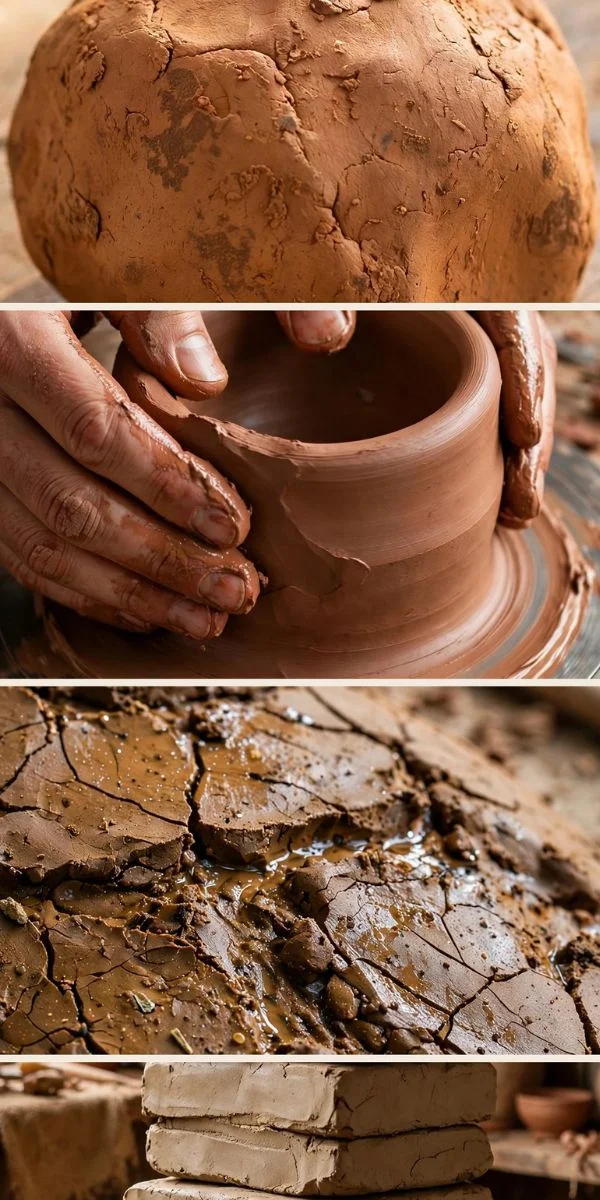
Earthenware is one of the oldest and most widely used pottery clays. It is usually fired at relatively low temperatures compared with stoneware and porcelain. Many earthenware bodies have excellent workability, making them suitable for beginners, decorative ceramics, and hand-building.
1. Red Earthenware Clay
Red earthenware clay contains iron-rich minerals that can produce shades ranging from orange and terracotta to deep reddish brown after firing. It is often associated with traditional pottery and terracotta objects.
Its relatively low firing temperature makes it useful for flowerpots, decorative vessels, tiles, and traditional ceramic pieces. Because earthenware remains more porous than stoneware or porcelain unless properly glazed, it is generally less suitable for watertight functional ware when left unglazed.
2. White Earthenware Clay
White earthenware is formulated to produce a pale or white ceramic surface after firing. Its light color makes it useful when artists want bright glazes or painted decoration to stand out.
It can be shaped by hand or on a pottery wheel. White earthenware is commonly used for decorative pottery, classroom projects, figurines, and beginner-friendly ceramics.
3. Terracotta Clay
Terracotta is a familiar type of low-fired clay that develops a warm orange, red, or brown color because of its iron content. The word is closely associated with fired earth and traditional ceramic objects.
Terracotta is particularly popular for planters, sculptures, tiles, garden ornaments, and architectural ceramics. Its earthy appearance can also be left exposed for a natural rustic finish.
4. Buff Earthenware Clay
Buff earthenware typically fires to a cream, tan, beige, or light brown color. It provides a softer alternative to strongly red earthenware while still retaining the approachable characteristics of a low-fire clay.
This type of clay can work well for decorative vessels, small bowls, sculptural pieces, and beginner pottery projects. Its neutral color also provides a versatile base for many glaze combinations.
5. Low-Fire Sculpting Clay
Low-fire sculpting clay is designed for projects that need easy shaping and relatively low-temperature firing. Depending on the formulation, it may contain materials that improve workability and help retain surface details.
It is useful for small sculptures, decorative pottery, classroom ceramics, and hand-built projects. The exact firing range should always be checked with the clay manufacturer’s instructions.
Read Next: 40 Halloween Clay Crafts
Stoneware Clay:
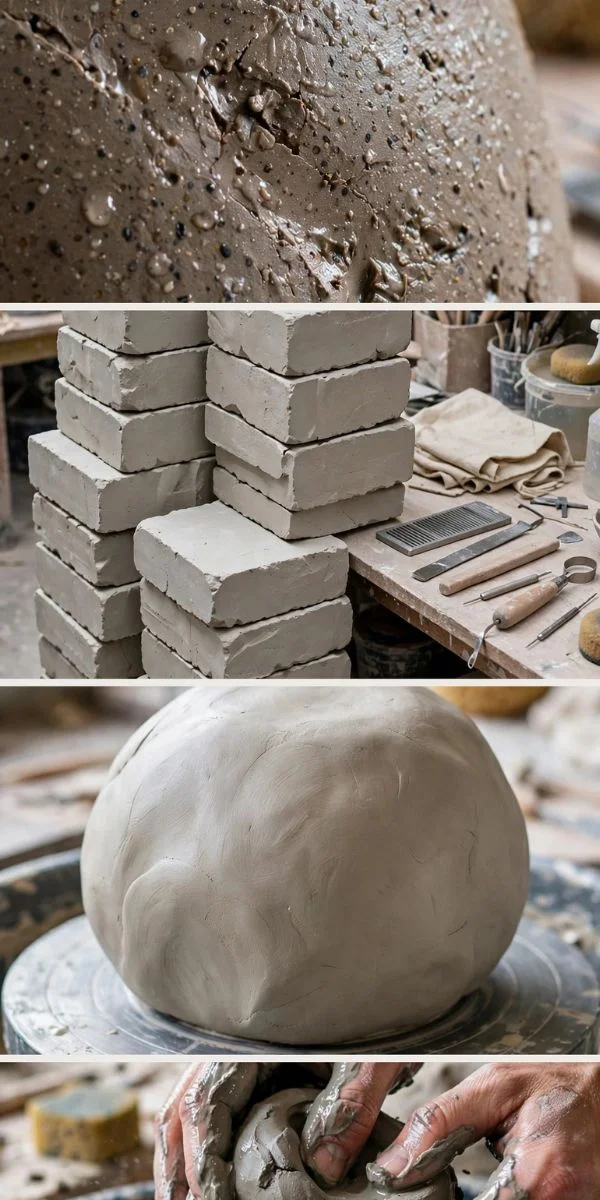
Stoneware is a high-fired ceramic clay category known for producing strong, durable pottery. Many stoneware bodies mature at temperatures around cone 5–6, although some formulations have different firing ranges.
Stoneware is widely used for functional ceramics because properly fired stoneware can have relatively low porosity and good mechanical strength.
6. White Stoneware Clay
White stoneware produces a light-colored ceramic body while offering the durability associated with stoneware. It is popular for mugs, bowls, plates, vases, and other functional pottery.
Its pale surface also works well with colored glazes because the underlying clay body does not strongly alter the appearance of many glaze colors.
7. Speckled Stoneware Clay
Speckled stoneware contains materials such as iron-bearing particles that create visible spots after firing. These natural-looking speckles can become an important part of the finished design.
It is especially attractive for rustic mugs, serving bowls, planters, and handmade dinnerware. The speckled surface gives simple forms additional visual character without requiring complicated decoration.
8. Brown Stoneware Clay
Brown stoneware develops a darker body color after firing, often ranging from medium brown to deep earthy shades. The color can provide strong contrast with lighter glazes.
Potters often use darker stoneware for rustic or contemporary designs. It can be thrown on a wheel, hand-built, or used for sculptural work depending on the particular clay body.
9. Dark Stoneware Clay
Dark stoneware contains enough mineral content to create a substantially darker fired body. Depending on the formulation and firing atmosphere, it can appear charcoal, brown, gray, or nearly black.
This clay is useful when the natural ceramic body is intended to contribute strongly to the final appearance. Transparent and lighter glazes can create particularly noticeable contrasts.
10. Porcelainous Stoneware Clay
Porcelainous stoneware is formulated to combine some characteristics associated with porcelain with the practical working properties of stoneware. It generally provides a relatively smooth and light-colored surface.
This type of clay can be used for refined functional pottery, vessels, decorative pieces, and wheel-thrown work. It offers an option for potters who want a cleaner surface without necessarily using traditional porcelain.
11. Grog-Added Stoneware Clay
Grog is previously fired ceramic material that has been crushed and added to a clay body. Grog can change the texture, shrinkage behavior, and working characteristics of the clay.
Grog-rich stoneware is particularly useful for hand-building, large forms, sculptures, and pieces where a textured surface is desirable. The particle size can vary significantly between clay bodies.
12. Porous Stoneware Clay
Some stoneware formulations are intentionally designed to retain a certain degree of porosity or mature at a particular firing range. Their characteristics depend heavily on the recipe and firing conditions.
Potters may choose these bodies for specific decorative, architectural, or functional applications. Always check the manufacturer’s absorption rating before using a particular clay for food or liquid-holding pottery.
Porcelain and Fine Clay:
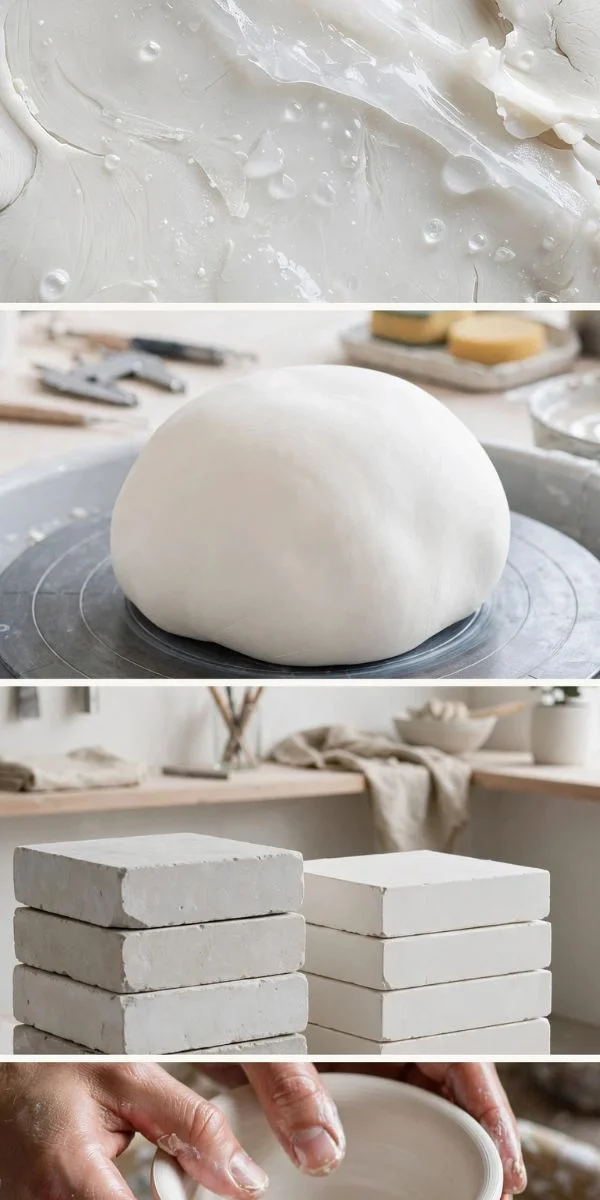
Porcelain is generally associated with very fine particles, a light-colored fired body, and high firing temperatures. It can create delicate and refined pottery, but its smooth texture and lower tolerance for uneven drying can make it more challenging for beginners.
13. True Porcelain Clay
True porcelain is typically made from refined materials including kaolin, feldspathic materials, and silica. When properly fired, it can become white, dense, and sometimes translucent in thin sections.
Porcelain is used for delicate vessels, tableware, sculpture, and highly refined ceramic work. Its combination of beauty and technical demands makes it a popular material for experienced potters.
14. Kaolin Clay
Kaolin, also known as china clay, is a major ingredient in many porcelain bodies. It is naturally light in color and has a relatively fine particle structure.
Pure kaolin is not always used alone for ordinary wheel-thrown pottery because its working characteristics differ from many balanced clay bodies. Instead, it is often combined with other ceramic materials to create porcelain and specialized clay recipes.
15. Paper Porcelain
Paper porcelain is a porcelain-based clay body containing a small amount of cellulose fiber or paper pulp. The added fiber can improve handling of thin or delicate forms before firing.
Once fired, the organic fibers burn away, leaving the ceramic structure behind. Paper porcelain is often used for intricate hand-built forms, thin sculptures, and experimental ceramic work.
16. Soft Porcelain
Soft porcelain refers to porcelain formulations that mature at lower temperatures than some traditional hard-paste porcelain bodies. Historical and modern formulations can differ considerably.
It has been used for decorative ceramics and refined objects. Modern ceramic artists may also use specialized soft porcelain bodies for particular forming and firing techniques.
17. Translucent Porcelain Clay
Some porcelain bodies can become translucent when made thin enough and fired correctly. This effect depends on the clay composition, thickness, firing temperature, and maturity of the ceramic body.
Thin porcelain cups, lampshades, decorative vessels, and sculptural pieces can demonstrate this characteristic particularly well.
18. Casting Porcelain Slip
Porcelain casting slip is a liquid ceramic material designed for slip casting rather than traditional wheel throwing. It can be poured into plaster molds to reproduce detailed shapes.
This approach is useful for producing repeated forms, delicate designs, figurines, and complex objects. Deflocculants are commonly used in casting slips to allow workable fluidity with relatively low water content.
Specialty and Sculptural Pottery Clays:
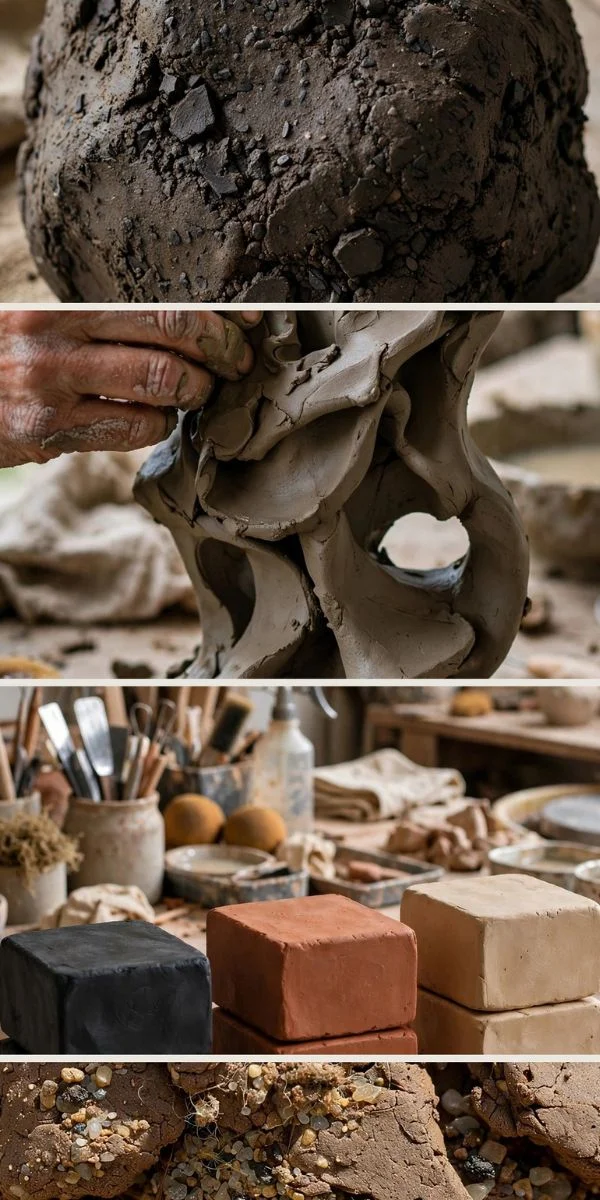
Specialty clays are designed around particular working characteristics, surface effects, forming methods, or firing requirements. They can be especially useful when standard earthenware, stoneware, or porcelain does not provide the desired result.
19. Raku Clay
Raku clay is formulated to tolerate the rapid temperature changes associated with raku firing better than many ordinary clay bodies. It often contains grog or other refractory materials.
Raku pottery is typically removed from a hot kiln and cooled or reduced using a specialized process. Because thermal shock is significant, ordinary pottery clay may crack under these conditions.
20. Sculpture Clay
Sculpture clay is formulated for building larger or more detailed three-dimensional ceramic forms. It may contain grog or other coarse particles that provide structural support.
The texture can help artists construct large sculptures without the clay becoming excessively soft. The appropriate firing temperature depends on the specific product.
21. Paper Clay
Paper clay contains cellulose fiber mixed into a ceramic clay body. The fibers can improve green strength and make certain repairs or joins easier before firing.
It is useful for experimental sculpture, thin forms, repairs, and complex hand-built pieces. During firing, the organic fibers burn away.
22. Grog Clay
Grog clay contains granular fired ceramic material. The grog can provide a noticeably textured feel and can help reduce some types of shrinkage and improve structural handling.
Potters often choose grogged clay for large sculptures, hand-built pottery, architectural ceramics, and rustic forms where texture is part of the aesthetic.
23. Black Clay
Black clay is formulated to develop a dark body color after firing. The final shade can range from dark gray to black depending on the composition and firing conditions.
It creates an interesting background for contrasting glazes and can also be attractive when partially exposed through carving, trimming, or surface decoration.
24. Blue Clay
Blue-colored clay bodies are specialty ceramic materials designed to produce a blue or blue-gray appearance, usually through specific mineral or pigment additions.
Because colorants can behave differently at different temperatures, potters should follow the manufacturer’s recommended firing schedule rather than assuming that the raw color will remain unchanged.
25. Paper Fiber Clay
Paper fiber clay is another fiber-enhanced ceramic material designed for hand-building and sculptural applications. The fibers can make unfired forms easier to handle and modify.
It is particularly useful for lightweight experimental constructions and detailed forms. The exact behavior depends on the clay recipe and fiber content.
26. Air-Dry Modeling Clay
Air-dry modeling clay hardens through drying rather than kiln firing. It is therefore different from traditional ceramic clay.
It can be useful for crafts, prototypes, decorative objects, and beginner projects when access to a kiln is unavailable. However, air-dry clay should not automatically be treated as food-safe or waterproof pottery.
27. Modeling Clay for Prototypes
Some modeling clays are intended primarily for creating prototypes, molds, or temporary forms rather than permanent ceramic objects.
These materials can be useful when testing shapes before committing to a fired clay body. Their properties and firing compatibility vary, so they should not be placed in a kiln unless explicitly designed for firing.
28. Fire Clay
Fire clay is a refractory clay capable of withstanding very high temperatures. It is often used in refractory products, kiln-related applications, and specialized ceramic bodies.
Because of its refractory characteristics, fire clay can also be incorporated into some pottery and sculpture formulations when higher-temperature stability is required.
29. Ball Clay
Ball clay is a very plastic secondary clay commonly used as an ingredient in ceramic bodies and casting slips. It can improve plasticity and help other ingredients work together.
Ball clay is rarely the only material in a finished pottery body. Instead, it is typically blended with materials such as kaolin, feldspar, silica, or other clays.
30. Local Natural Clay
Natural clay collected from a local environment can sometimes be processed and used for pottery, but it requires careful preparation and testing. Its mineral composition can vary substantially from one location to another.
Potters may screen, settle, dry, remix, and test natural clay before using it for a finished piece. Test tiles are especially important because firing behavior, shrinkage, and strength are difficult to predict from appearance alone.
How to Choose the Right Clay for Pottery
The best clay for pottery depends on what you want to make and how you plan to fire it. A beginner making simple mugs may want a workable stoneware body, while someone creating delicate decorative pieces may prefer porcelain.
Consider the clay’s firing temperature, plasticity, shrinkage, texture, fired color, absorption, and compatibility with your glaze.
Clay for Pottery on a Wheel
Wheel throwing generally benefits from a clay body with good plasticity and enough strength to hold its shape. Stoneware is a common choice because it provides a useful balance between workability and durability.
Porcelain can also be thrown successfully, but its smooth texture and handling requirements may make it more demanding.
Clay for Hand-Building
Hand-building gives you more flexibility in choosing textured or grogged clay. Paper clay, sculpture clay, stoneware, and grog-containing bodies can all be useful depending on the size and design.
For large hand-built forms, a clay body with suitable structural strength can help reduce problems during construction and drying.
Clay for Functional Pottery
For mugs, plates, bowls, and serving pieces, choose a clay body specifically rated for the intended firing temperature and use.
A clay being labeled “stoneware” does not by itself guarantee that every finished piece is food-safe. Food safety also depends on the glaze, firing, surface condition, and manufacturer’s specifications.
Clay for Beginners
Beginners often benefit from a forgiving clay body that is easy to wedge, shape, and fire. Low-fire earthenware and many stoneware bodies are commonly used in introductory pottery classes.
Starting with one clay body can also make it easier to learn how moisture, drying, throwing, trimming, and firing affect the final result.
Important Pottery Clay Facts
Clay contains extremely fine mineral particles that become plastic when mixed with an appropriate amount of water.
Drying and firing are different stages. Air drying removes much of the physical water, while kiln firing causes permanent chemical and structural changes.
Clay also shrinks during drying and firing. The total amount varies according to the clay body, moisture content, forming method, and firing schedule.
Not every clay can be fired at every temperature. Firing a clay beyond its recommended maturation range can cause deformation, bloating, melting, or other defects.
Glaze compatibility matters too. A glaze and clay body need compatible firing ranges and thermal expansion characteristics to reduce problems such as crazing or shivering.
Tips for Working With Pottery Clay
Keep unused clay sealed so it does not dry out prematurely. Kneading or wedging can help create a more uniform working body and reduce certain forming problems.
Avoid drying pottery too quickly. Uneven drying can create stresses, especially in large or irregular forms.
Use test tiles before committing to a large project. A small test can reveal the fired color, glaze interaction, shrinkage, texture, and surface quality of a particular clay body.
Always follow the manufacturer’s recommended firing range. Cone ratings and kiln schedules are important because ceramic materials behave differently at different temperatures.
Frequently Asked Questions
What is the best clay for pottery?
There is no single clay that is best for every pottery project. Stoneware, earthenware, porcelain, and specialty clay bodies each have different characteristics. The right choice depends on the project, forming method, firing temperature, and desired finish.
What clay is easiest for beginners?
Many beginners find low-fire earthenware or approachable stoneware easy to work with. A clay with good plasticity and a firing range compatible with the available kiln is generally a practical starting point.
Can you use natural clay for pottery?
Yes, natural clay can sometimes be processed and fired, but it needs testing and preparation. Natural deposits can contain sand, organic material, soluble salts, and minerals that affect shrinkage and firing behavior.
Is stoneware clay waterproof?
Properly fired stoneware can have relatively low water absorption, but the exact result depends on the clay body and firing conditions. Glazing can provide an additional surface barrier, but not every stoneware body has the same absorption level.
What is the difference between clay and porcelain?
Porcelain is a type of ceramic clay body generally made from highly refined materials and fired at high temperatures. It can produce a very white, dense surface and may become translucent when thin enough.
Can pottery clay be reused?
Yes. Unfired clay scraps can generally be reclaimed by drying them, adding water, and allowing them to rehydrate before thoroughly mixing and wedging. Keep different clay bodies separated to avoid changing their firing characteristics.
Why does pottery clay crack?
Cracking can result from uneven drying, excessive thickness changes, poor joining, unsuitable moisture levels, excessive shrinkage, or stresses created during firing. Large pieces are particularly sensitive to uneven drying.
Can all pottery clay go in a kiln?
No. Only materials specifically intended for kiln firing should be fired. Air-dry modeling clay and many craft clays are not designed for ceramic kilns and can behave unpredictably or produce undesirable fumes.
What clay is used for mugs and plates?
Stoneware and porcelain are commonly used for mugs, plates, and other functional ceramics. The specific clay should be rated for the intended firing temperature and compatible with the chosen glaze.
How should pottery clay be stored?
Keep workable clay sealed in airtight plastic or another suitable moisture-resistant container. Preventing the clay from drying out helps preserve its plasticity and reduces unnecessary waste.